Houskové knedlíky
houskové knedlíkysay HOWS-ko-veh KNED-lee-kee
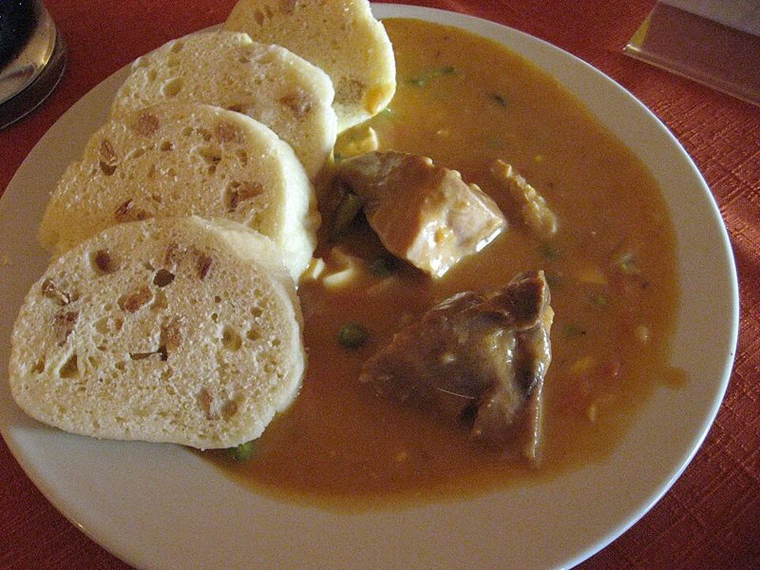
Sliced bread dumplings that soak up every drop.

- First record
- 1850 · Empires & migration
- Fold
- Slices of a loaf
- Cooked
- Boiled, steamed
Field notes
Story
Bohemian bread-roll dumplings boiled as a log and sliced, the indispensable partner to Czech sauces and roasts.
- How to eat it
- Mop up svíčková sauce or roast pork gravy.
- When
- Sunday lunch: vepřo-knedlo-zelo.
History
Jesenská's 1925 recipe is the earliest clear text (D). Rettigová's 1826/1833 bread-roll Speckknödel is an ancestor. A 7th-century first mention is unsupported.
Did you know Traditionally they are sliced with a thread, not a knife, to keep them fluffy.
Where
From Czechia.
- OriginBohemia · Czechs
Evidence
Fairly sure. A dated text records it by 1850.
We list 3 sources: 2 dated texts, 1 secondary. How grading works.
First record Bread-roll knedlík as a side dish emerges in the mid-19th c. (S, stoplusjednicka / Tajemství české minulosti); the earliest dated text opened is Rettigová's roll-and-flour Speckknödel (German ed. 1833, D), the exact modern dish first opened in Jesenská 1925 (D)
Sources
- D
Die Haus-Köchin ... von Magd. Dobr. Rettig, Zweyte vermehrte Auflage (Leeds University Library copy)
Rettigová's cookbook (German edition 'Die Haus-Köchin', Königgrätz & Prague; archive.org dates it 1833, OCR of title page reads 1853) has '24. Speckknödel': diced roll (Semmel) fried with bacon, a second diced roll…
Rettigová's cookbook (German edition 'Die Haus-Köchin', Königgrätz & Prague; archive.org dates it 1833, OCR of title page reads 1853) has '24. Speckknödel': diced roll (Semmel) fried with bacon, a second diced roll soaked in cream with eggs, flour added, boiled in the meat broth. A bread-roll-and-flour dumpling ancestor, but with bacon/meat and shaped as balls; no plain Semmel-/Serviettenknödel in the index. - D
Milena Jesenská's 'Dobrý knedlík ke svíčkové': milk, yolks, 27 dkg flour, two diced fried rolls (housky), butter and beaten whites, boiled in a napkin for 3/4 hour. Earliest text found and opened that is unambiguously today's flour-and-roll log dumpling served with svíčková.
- S
The word: Jan Hus complains of Czechs who speak half Czech, half German, saying 'knedlík za šišky' (knedlík instead of šišky), so the loan from German Knödel is attested in Czech by the early 15th c.; the 'classic…
The word: Jan Hus complains of Czechs who speak half Czech, half German, saying 'knedlík za šišky' (knedlík instead of šišky), so the loan from German Knödel is attested in Czech by the early 15th c.; the 'classic Viennese houskový knedlík arose only in the mid-19th century and its recipe soon spread to Bohemia'; vepřo-knedlo-zelo is a 19th-c. combination.
Found by research and reviewed, October 2026.
The tagline and story are editorial; facts trace to the atlas research.
Family E