Kenkey: Ga komi
komisay KEN-kay
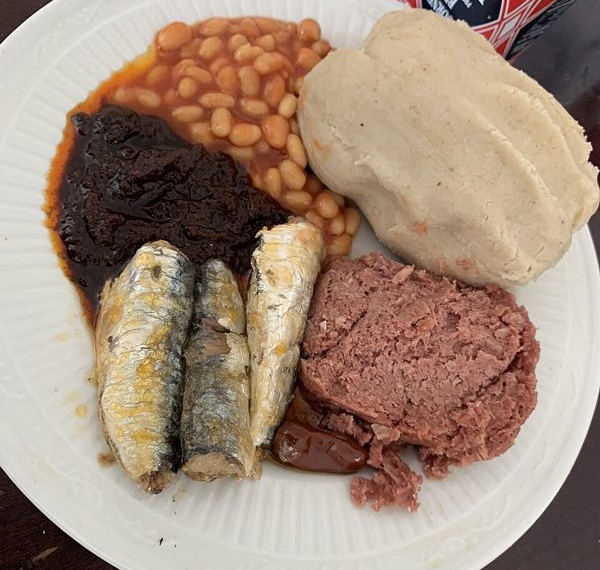
Sour fermented corn, with fish and pepper sauce.
SAArchaeological or primary sourceFamily H · Leaf-wrapped grain parcels (separate inventions)

- Region
- Africa
- First record
- 1858 · Empires & migration
- Fold
- Leaf parcel or pillow
- Cooked
- Steamed, boiled
Anatomy
Inside

- Dough
- Fermented maize
- Made with
- Fermented corn dough, half-cooked (aflata), wrapped in corn husk
- Cooked
- Steamed, boiled
- Size
- About 9 cm across
Tastes of
- sour fermented corn
- fried fish
- shito pepper sauce
- raw onion
Texture
- firm, dense
Field notes
Story
Ga and Fante fermented corn dough wrapped in corn husk or plantain leaf and steamed. Maize arrived with the Portuguese in the 16th century. Borderline dumpling.
- How to eat it
- Unwrap and eat with fried fish, shito and fresh pepper.
- When
- Everyday; the Ga Homowo festival.
Did you know Barbados conkies may be a distant cousin, carried across the Atlantic by the slave trade.
Range
Where
From Ga people, Greater Accra. Popular in Ghana, Togo, Benin, eastern Côte d'Ivoire.
Pin · Greater Accra (Ga) · historical or cultural region, not a town
How sure we are
Evidence
Well established. An archaeological find or a primary source backs it.
We list 3 sources: 3 primary or archaeological. How grading works.
First record Zimmermann, Ga vocabulary, 1858: "komi, boiled maize-bread" (A); first found
Sources
- A
'komi, n. boiled maize-bread; used where baking is prohibited by the fetish.' Also 'abolo ... bread baked of maize (Ot. abodo): comp. komi'.
- A
see kenkey-fante-dokono evidence (de Marees 1912 edition; Atkins 1735)
The trade name kenkey/kankie is older and recorded on the Fante coast: de Marees 1602 'Kangues' / 'Kanquies' at Elmina and Cape Coast; Atkins 1735 'Canky'. See kenkey-fante-dokono.
- A
Wanderings in West Africa from Liverpool to Fernando Po, vol. II, ch. IX (London, 1863)
Richard Burton at Accra (chapter 'A pleasant day in the Land of Ants'): 'Kankie is native bread ... after various complicated operations, soaking the grain, pounding, husking, triturating, and keeping till the right moment, it is boiled or roasted and packed in plantain leaves.'
Found by research in October 2026; awaiting editorial review.
Notes from the research
Maize arrived with the Portuguese in the 16th c. Women's trade.
The tagline and story are editorial; facts trace to the atlas research. History sources are from the atlas and not yet independently checked.
Family H
Kin
More leaf-wrapped grain parcels (separate inventions)