
The thin cassava stick that goes with ndolé.
Duala, Littoral Cameroon · first recorded 1900
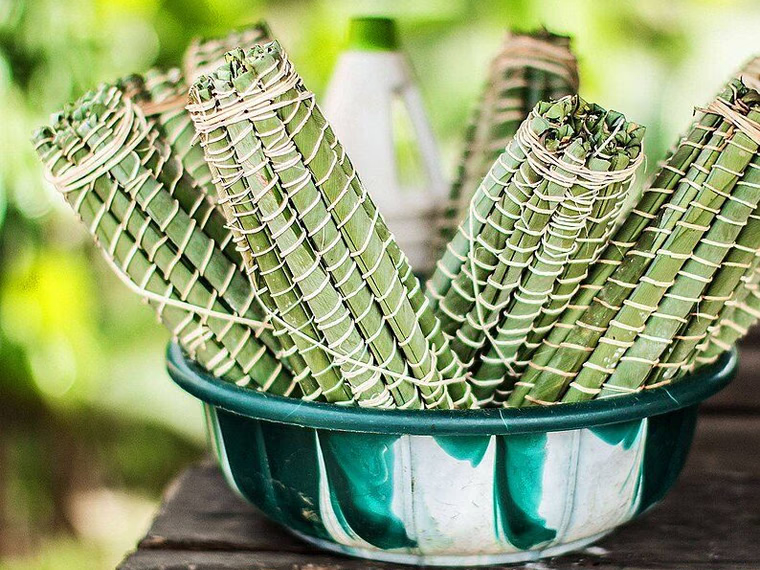 Photo FishEye · CC BY-SA 4.0 · Wikimedia Commons
- Dough
- Starch doughLeaf-wrapped; thinner tube than bobolo
- Made with
- Fermented cassava
- Cooked
- Steamed
- Size
- About 25 cm acrossThe leaf-rolled stick is about 25 cm long.
- Note
- A borderline case: it stretches the definition of a dumpling.
Tastes of
- fermented cassava
Field notes
Story
Duala parcel from Cameroon's Littoral, fermented cassava steamed in leaves in a thinner tube than bobolo.
- How to eat it
- With ndolé, its classic partner.
Did you know A mission photograph taken in Douala around 1900 is captioned "Miondo", a speciality of Duala women.
Make it
Miondo (thin fermented cassava sticks in leaves)
- Makes
- about 16 thin sticks, tied in pairs
- Ferment
- 3-4 days
- Prep
- 60 min
- Cook
- 45 min
- Level
- hard
- Fold
- leaf wrap
How to fold: Leaf wrap
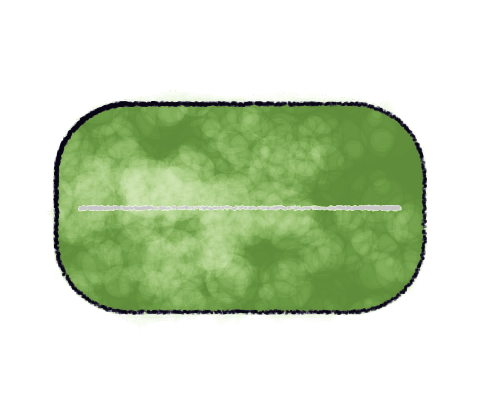
1 Lay out a softened leaf or husk
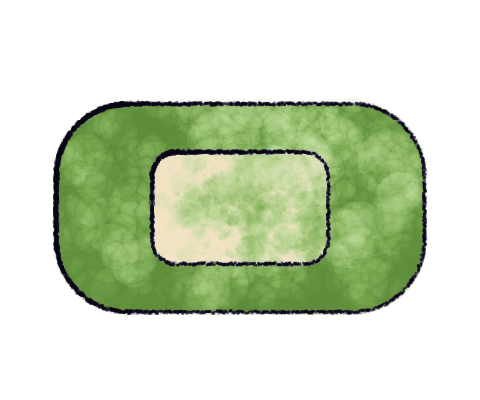
2 Spread the dough or batter in the middle
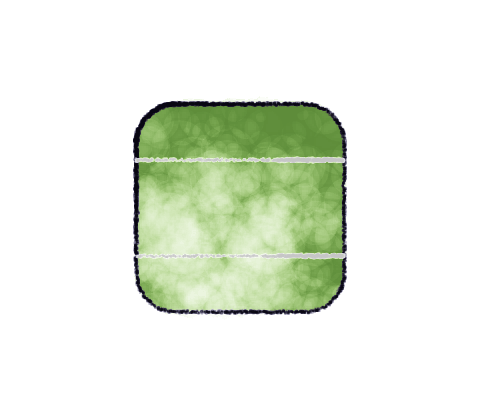
3 Fold in the long sides, then the ends
4 Tie the parcel and steam or boil it
Placeholder diagram. The atlas's illustrated fold animations will replace it.
Ingredients for 4
Paste
Wrapping
To serve
Method
- Peel the cassava, cut it into large chunks or leave it whole, and wash it well.
- Put it in a large pot, cover with lukewarm water, lay a few leaves on top if you have them and put on the lid.
- Leave at warm room temperature for 3 to 4 days, until the roots are soft enough to crush in the hand and smell sour.Wait 3 days
- Drain the cassava and rinse it in several changes of water.
- Pull out the stringy central fibres.
- Squeeze the pulp hard in a clean cloth, or leave it under a heavy weight, to press out as much water as possible.
- Pound the pulp in a mortar, or better, grind it, until you have a soft, supple paste with no fibres.
- Spread a thin line of paste along a leaf to make a stick about 1 cm wide and 25 cm long.
- Roll the leaf tightly around it like a cigar.
- Put two sticks side by side and tie them together lightly with string. Repeat with the rest.
- Line the bottom of a pot with leaf ribs or an upturned lid, add a little water and stack the bundles on top, clear of the water.
- Cover and steam until the sticks are firm and slightly translucent.Timer 45 min
- Cool for a few minutes, then unwrap and serve with a sauce.
Sources
- Miondo || Recette du miondo du Cameroun, Camerdish
- The effectiveness of cyanogen reduction during cassava processing into miondo, T. Agbor-Egbe, I. L. Mbome, L. Noubi and S. Trèche (ORSTOM, 1995)
Where
From Duala, Littoral Cameroon.
Evidence
Strong evidence
The earliest record we've found is a photograph taken for the Basel Mission in New Bell, Douala, between 1900 and 1903. Its caption calls miondo cassava "sausages" and "a speciality of Duala women". A Duala dictionary of 1914 confirms the method: cassava paste wrapped in leaves, sausage-style, and tied with raffia.
Sources
- 1900-1903Earliest record

Basel Mission Archives, image QE-30.016.0018
Photograph, original caption 'Miondo (Stockyamswürste) eine Specialität v. Dualafrauen' ('Miondo, a kind of sausage made of cassava, a speciality made by the women of Duala'); photographer Johannes Immanuel Leimenstoll; date 1900-1903; place New…
- 1914
Wörterbuch der Duala-Sprache (Hamburg: L. Friederichsen & Co., 1914)
mondo, my- eine aus Kassada hergestellte Speise (der Kassada-Brei wird wurstartig in Blätter eingewickelt)' (a food made from cassava; the cassava paste is wrapped sausage-like in leaves). Other entries name the shrub whose large leaves and the…
The tagline and story are editorial; the facts trace to the research above. How we weigh evidence
Family H
Kin
More leaf-wrapped grain parcels (separate inventions)


