

Field notes
History
Living ritual food. Explicitly not linked to the Dragon Boat Festival (taiwan.md). Millet has been central to Rukai calendars (Taipei Times).
吉拿富
SAArchaeological or primary sourceFamily H · Leaf-wrapped grain parcels (separate inventions)
Anatomy
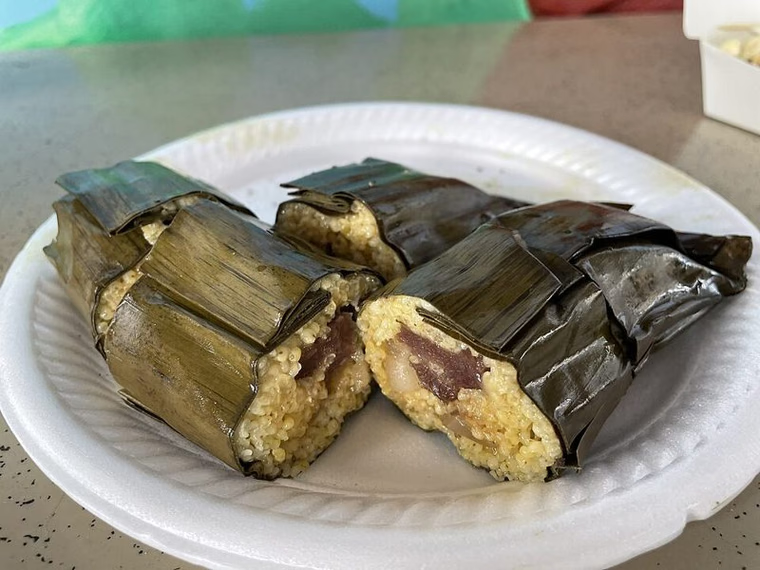
Not known yet We don’t yet have a written story, a recipe or a precise place of origin for Cinavu. What we do have is below, with its sources.
Field notes
Living ritual food. Explicitly not linked to the Dragon Boat Festival (taiwan.md). Millet has been central to Rukai calendars (Taipei Times).
Range
From Paiwan (also Rukai, Puyuma), Pingtung and Taitung, Taiwan.
Pin · Paiwan uplands, Pingtung · region (first-level subdivision), not a town
How sure we are
Well established. An archaeological find or a primary source backs it.
We list 5 sources: 3 primary or archaeological, 1 dated text, 1 secondary. How grading works.
First record Banzoku chosa hokokusho, Paiwan volume, 1921: "chinabo", dried-taro flour and pork wrapped in leaves, given as tribute (A); first found, read as OCR text
臺灣總督府蕃族調査會 蕃族調査報告書 排彎族・獅設族 (1921), frame 57
番族慣習調査報告書 第五卷之三 (排灣族) (1922), p. 103
Paiwan Dictionary (Pacific Linguistics Series C, no. 73)
Entry under tsavu (wrapping): 'ts/in/avu: qavay-dumpling wrapped in leaves; leaf wrapper for qavay'. English index: 'DUMPLING (LEAF-WRAPPED): qavay, ts/in/avu'. (Ferrell writes ts for the sound now spelled c, so tsinavu = cinavu.)
番族慣習調查報告書 第五卷: 排灣族 / 蕃族調查報告書 第八冊: 排灣族‧賽夏族
The colonial survey volume on the Paiwan exists in Chinese translation (Institute of Ethnology, Academia Sinica); a search summary says it has a food 'avai' in which grain is wrapped round meat into a ball. Not opened; wording unverified.
Cinavu (search-result summary)
Modern: served at the 2024 presidential inauguration state banquet; made for ceremonies, weddings and guests.
Found by research in October 2026; awaiting editorial review.
History sources are from the atlas and not yet independently checked.
Family H
More leaf-wrapped grain parcels (separate inventions)