
Wheat-ear braids of potato, pecorino and mint.
Ogliastra, Sardinia · first recorded 1851
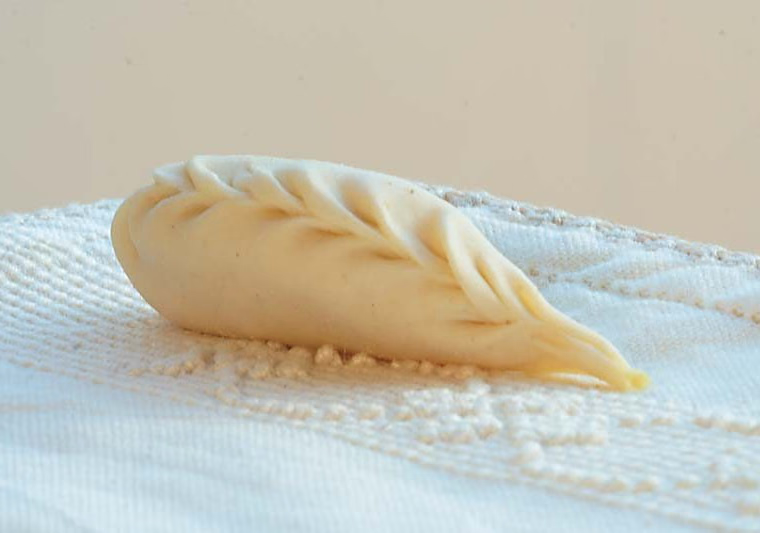 Photo andria · CC BY-SA 2.0 · Wikimedia Commons
- Wrapper
- Wheat doughWheat-ear braid
- Filling
- Potato, pecorino, mint
- Cooked
- Boiled
- Size
- 5–5.5 cm acrossA 6–7 cm round pleated into a closed crescent is about 0.8 times as long: about 5 cm.
Tastes of
- potato
- pecorino
- mint
- tomato
Texture
- soft, plump
Field notes
Story
Sardinian pasta closed with a braided seam that looks like an ear of wheat, filled with potato, pecorino and mint. EU PGI since 2016.
- How to eat it
- With tomato sauce or butter and sage.
- When
- Traditionally All Souls' Day.
History
"Culurgionis d'Ogliastra" registered as an EU PGI on 28 September 2016, published in the EU Official Journal (L 262) on 29 September 2016 (Qualigeo; ANSA).
Did you know The braided seam is said to protect against bad luck.
Make it
Culurgionis d'Ogliastra (potato, pecorino and mint, closed "a spighitta")
- Makes
- about 36 culurgionis
- Prep
- 90 min
- Cook
- 45 min
- Level
- hard
- Fold
- crescent pleat
How to fold: Crescent pleat
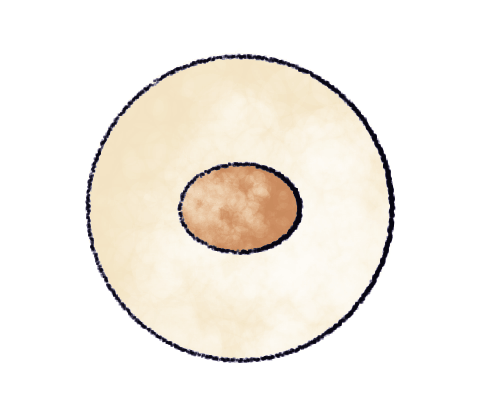
1 Filling in the middle of the round
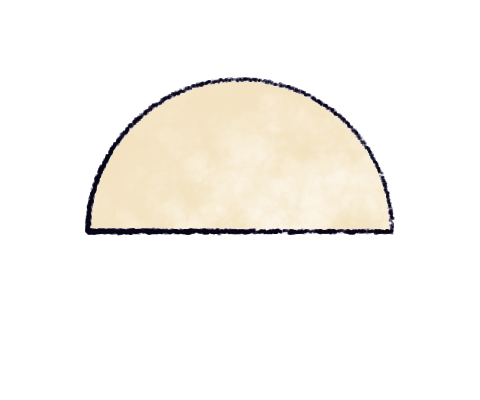
2 Fold in half and pinch the centre shut
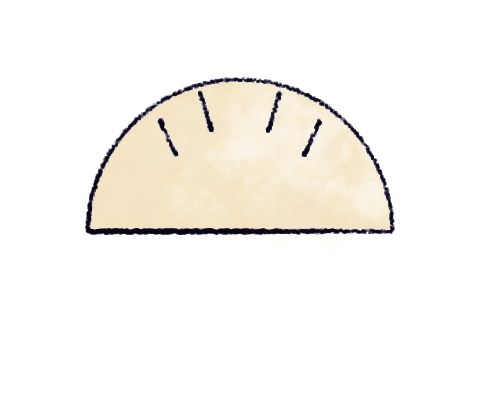
3 Make small pleats on the front edge only
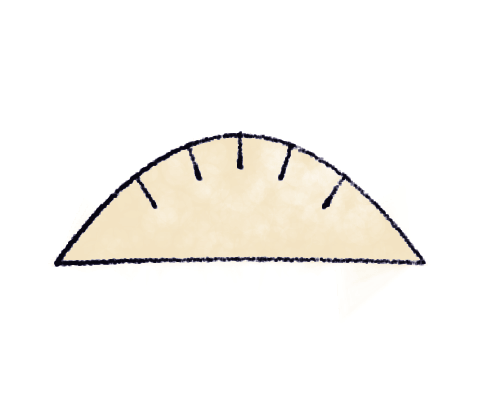
4 The pleats curve it into a crescent
Placeholder diagram. The atlas's illustrated fold animations will replace it.
Ingredients for 4
Dough
Filling
To serve
Method
- Boil the potatoes until completely tender, or steam them in their skins.Timer 40 min
- Meanwhile, mix the flour, semolina and salt, add the oil, then work in the water a little at a time until you have a firm dough.
- Knead until smooth and even.Timer 5 min
- Wrap the dough and let it rest.Timer 30 min
- Peel the potatoes while hot and put them through a ricer.
- Mix in the pecorino, garlic, mint, oil and the sour cheese if you have it. Taste for salt. Work to a smooth, stiff purée and leave to cool completely.
- Roll the dough thin, about 1–2 mm, a piece at a time, keeping the rest covered.
- Cut rounds 6–7 cm across. Gather the trimmings and re-roll them.
- Put a walnut-sized ball of filling on a round (a piping bag makes this quicker). Hold it in the cupped fingers of one hand and press the filling down lightly.
- Starting at one end, fold a small pleat of dough over the filling from the left side and pinch it, then one from the right, overlapping the first.
- Carry on, alternating thumb and forefinger, so the pleats interlock in a raised braid like an ear of wheat running the length of the dumpling.
- Pinch the far end to a point. Set the finished culurgionis on a cloth dusted with semolina.
- Bring a wide pot of salted water to the boil and lower in the culurgionis gently, a few at a time, so they do not burst.
- Cook until they float, then for one minute more.Timer 4 min
- Lift out with a slotted spoon and serve on the warm tomato sauce with grated pecorino.
Sources
- Ogliastra Culurgionis, GialloZafferano
- Culurgiones sardi, la vera ricetta tradizionale dell'Ogliastra (passo passo), Silvia Romano (GreenMe)
- Culurgiones ogliastrini, Dissapore
Where
From Ogliastra, Sardinia.
- OriginOgliastra · Sardinians
Protected name
EU PGI · Culurgionis d'Ogliastra
IT-PGI-0005-01307 · OJ L 262, 29.9.2016 · registered 2016-09-28
Protected area: 23 Ogliastra communes (Arzana, Bari Sardo, Baunei, Cardedu, Elini, Gairo, Girasole, Ilbono, Jerzu, Lanusei, Loceri, Lotzorai, Osini, Perdasdefogu, Seui, Talana, Tertenia, Tortolì, Triei, Ulassai, Urzulei, Ussassai, Villagrande Strisaili) plus Esterzili, Sadali and Escalaplano
The area crosses the provinces of Nuoro and Sud Sardegna; it is defined by communes, not by a province.
Evidence
Good evidence
Giovanni Spano's Sardinian dictionary of 1851 gives culunzone, culungionis and culirgioni as the island's words for ravioli. Porru's 1866 dictionary goes further, listing versions filled with ricotta, with cheese, and with sweet preserves. Neither is specific to the Ogliastra dumpling protected today, so these are the earliest records of the name, not of this exact form. A document from 1811 is mentioned online, but we haven't been able to see it.
Sources
- 1811

A search-result summary (cesarine.com recipe blog) says 'the first historical mention... dates back to an 1811 document that refers to Colurgiones con casu'. The page returned HTTP 429 and was not read; no archive, author or shelfmark is known.
Confirmed by web search; not yet read in full
- 1851–1852Earliest record

Vocabolario sardo-italiano e italiano-sardo
Dictionary, Italian–Sardinian part: 'Raviuòli, sm. Log. culunzone. Mer. culungionis. Set. culugnoni. Gal. pululgioni.' Sardinian–Italian part: 'Pulclgiòni, m. Gal. V. Culunzone.' (Log. = Logudorese, Mer. = southern/Campidanese, Set. = northern, Gal.…
- 1851
Vocabolario sardo-italiano e italiano-sardo
The Sardinian–Italian headword that the first pass could not see in the OCR, from Google's text of the same 1851 dictionary: 'CULIRGIONI, m. Mer. pasticciotti, raviuoli, tortelli. Culirgioni da terra, ucc. pivière.' (Mer. = southern/Campidanese).…
- 1866
Dizionariu sardu-italianu (2nd ed.)
Second (1866) edition of Porru's Campidanese dictionary: 'Culirgiòni, nm. pasticciotti, tortelli, gobbetti. Culirgionis de rescottu, pasticciotti col ripieno di ricotta. Culirgionis de pasta reali, pasticciotti di pasta reale. Culirgionis de…
- 2016
Publication of an application: 'Culurgionis d'Ogliastra', single document, OJ C 185, 24.5.2016, p. 3
EU single document for the PGI (read in the Polish OJ edition): describes a 'long tradition' and a filling used 'for decades' but cites no text older than 1989. Publications listed: G. Perisi, Cucine di Sardegna (Muzio, 1989); R. Campanelli, La…
- Undated
Glossario (Il giorno del giudizio, edizione Centro di Studi Filologici Sardi)
Glossary to a critical edition of Salvatore Satta, Il giorno del giudizio, quotes an older dictionary definition: 'culunzònes, ravioli. Altrove manicaretto composto di cacio, farina, e altre droghe, in forma di palla, che si frigge in padella...'…
The tagline and story are editorial; the facts trace to the research above. How we weigh evidence
Family D


