Ravioli
raviolisay rah-vee-OH-lee
Medieval Italy's filled-pasta ancestor.

- Region
- Italy
- First record
- 1380 · Islamic & Mongol world
- Fold
- Leaf parcel or pillow
- Cooked
- Boiled
- Wrapper
- Wheat doughEgg; Square/round
- Filling
- Ricotta-spinach, meat, herbs
- Cooked
- Boiled
- Size
- About 4 cm across
Tastes of
- ricotta
- spinach
- butter
- sage
Texture
- silky pasta
Field notes
Story
Square or round filled pasta first recorded in 14th-century Prato and Venice; the English Forme of Cury (c. 1390) has "rauioles". Tomato sauce came centuries later.
- How to eat it
- With butter and sage, ragù or tomato sauce.
- When
- Everyday and festive.
History
14th-c. Datini papers. Venetian Libro per cuoco (herb-egg-cheese in broth). Scappi 1570. Tomato sauce only after the 16th c. Canning during WWI or by US immigrants (disputed).
Did you know Medieval ravioli were often cooked in broth, and fried versions were also common.
Make it
Ricotta and spinach ravioli with butter and sage
How to fold: Half-moon

1 Roll a thin round of dough

2 Spoon the filling into the middle
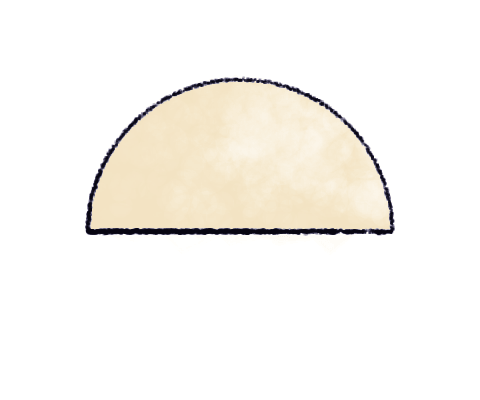
3 Fold it in half over the filling
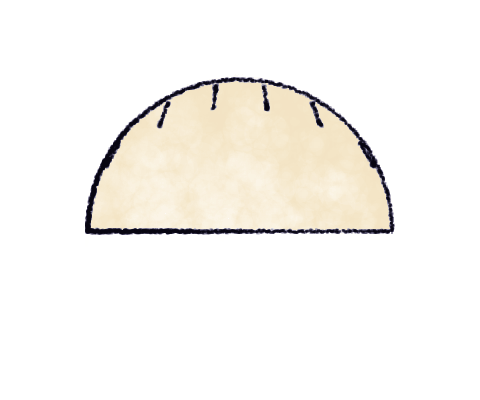
4 Press the edge firmly to seal it
Placeholder diagram. The atlas's illustrated fold animations will replace it.
Ingredients for 4
Pasta
Filling
To serve
Method
- Heap the flour on a board, make a well, add the eggs and salt and beat them with a fork, drawing in flour from the edges.
- Knead by hand for about 10 minutes until the dough is smooth and springs back when pressed. · timer 10 min
- Wrap the dough and leave it at room temperature to relax. · timer 30 min
- Meanwhile wilt the spinach in a covered pan with only the water clinging to the leaves. · timer 3 min
- Cool the spinach, squeeze it as dry as you can in your hands, then chop it very finely.
- Mix the spinach with the ricotta, Parmigiano, nutmeg, salt and pepper (and the yolk if the mix is soft). Chill until needed.
- Roll a quarter of the dough into a thin sheet, about 1 mm, keeping the rest covered.
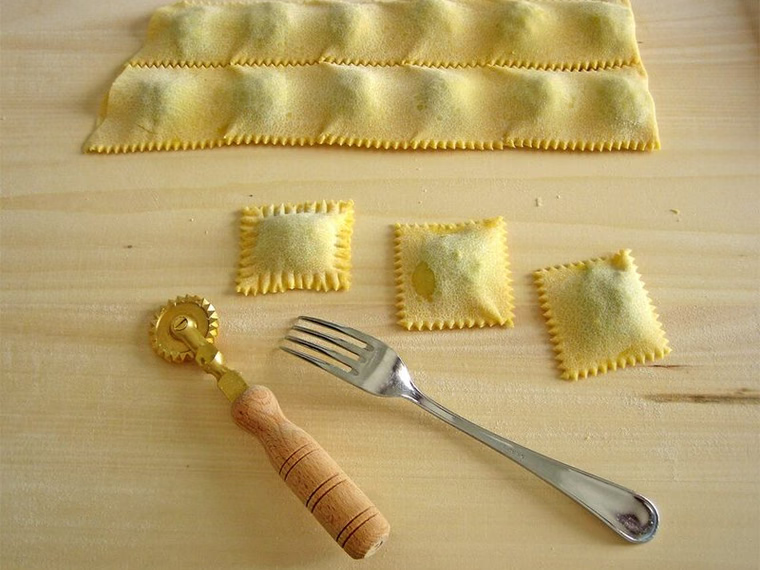
- Put teaspoons of filling along the sheet about 2 cm apart.
- Cover with a second sheet, pressing around each mound to push out the air.
- Cut into 4 cm squares with a fluted wheel and lay them on a tray dusted with semolina. Repeat with the rest of the dough.
- Melt the butter gently with the sage leaves until it foams and smells nutty.
- Cook the ravioli in a large pot of salted boiling water until tender at the edges. · timer 3 min
- Lift them out with a slotted spoon, toss in the sage butter and serve with grated Parmigiano.
Notes. Ricotta and greens is the oldest well-documented lean (magro) filling and is found all over Italy; in Liguria the greens are often wild herbs (preboggion) and the pasta is cut larger, in Piedmont the "plin" are pinched from a meat filling, and Sardinian versions add saffron. Chard can replace the spinach. Ravioli are recorded in Tuscan merchant papers (the Datini archive in Prato) in the 14th century. Fill the sheets as soon as they are rolled: dry pasta will not seal. Uncooked ravioli freeze well on the tray, then bagged; cook them from frozen for 1 minute longer.
Written for the atlas from several sources, cross-checked: Ricotta and spinach ravioli, GialloZafferano; Ravioli di spinaci burro e salvia, Le ricette dello Spicchio d'Aglio. Not yet kitchen-tested.
Where
From Northern/central Italy. Popular in global.
- OriginLiguria/N. Italy (contested) · Italians
Evidence
Fairly sure. A dated text records it by 1380.
The grade comes from the project's source report and has not yet been checked source by source. How grading works.
This entry is drawn from the World Dumpling Atlas, §6.17, the project's source report. Its grade, D dated text, says how far that has been checked against a primary source.
The tagline and story are editorial; facts trace to the atlas research.
Family D
Kin
More mediterranean filled pasta