
.jpg)
Field notes
History
Wikipedia says the Ministry of Arts and Culture recorded koki as one of the 111 elements of Cameroon's national intangible cultural heritage in a decree of 21 February 2021 (decree not consulted).
Anatomy
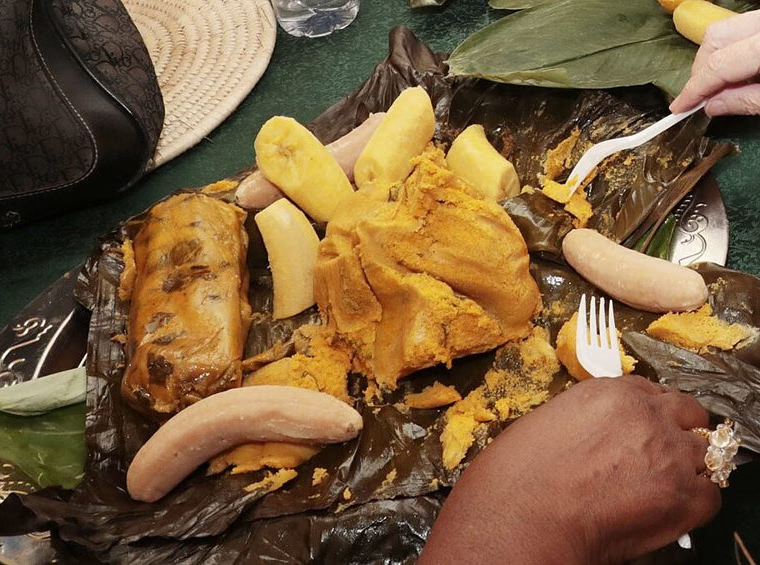
Not known yet We don’t yet have a written story, a recipe or a precise place of origin for Koki. What we do have is below, with its sources.
Field notes
Wikipedia says the Ministry of Arts and Culture recorded koki as one of the 111 elements of Cameroon's national intangible cultural heritage in a decree of 21 February 2021 (decree not consulted).
Range
From Mbo of Moungo; also Bassa, Banen, Makaa, Bamileke. Popular in all of Cameroon.
Pin · Mbo of Moungo (Nkongsamba) · historical or cultural region, not a town
How sure we are
Well established. An archaeological find or a primary source backs it.
We list 3 sources: 1 primary or archaeological, 1 dated text, 1 secondary. How grading works.
First record Dinkelacker, Duala dictionary, 1914: "ekoki", a bean-flour pudding with palm oil (A); first found
Wörterbuch der Duala-Sprache (Hamburg: L. Friederichsen & Co., 1914)
Cameroon's UNESCO nomination file for the Nguon cites 'l'Arrêté N°20/0006/MINAC/CAB du 21 février 2020 portant classement des Eléments du Patrimoine Culturel Immatériel au Patrimoine National'. The file does not reproduce the list, so koki's inclusion is NOT confirmed.
Wikipedia: koki is 'acknowledged and recorded as such by the Ministry of Arts and Culture, as part of the 111 elements of Cameroon's national intangible cultural heritage, decreed on 21 February 2021'. The sentence carries no reference.
Found by research in October 2026; awaiting editorial review.
History sources are from the atlas and not yet independently checked.
Family H
More leaf-wrapped grain parcels (separate inventions)