Kozhukattai
கொழுக்கட்டைkoḻukkaṭṭaisay ko-zhuk-KUT-tai
South India's sweet and savoury rice dumpling.
SAArchaeological or primary sourceFamily G · Rice dough (several origins)
- Region
- South Asia
- First record
- 1809 · Empires & migration
- Fold
- Half-moon
- Cooked
- Steamed
Anatomy
Inside
- Wrapper
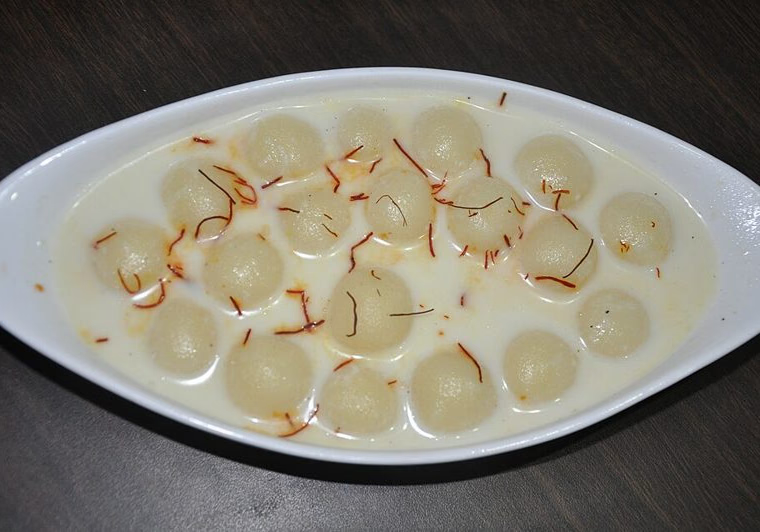
- Rice doughRice
- Filling
- Coconut-jaggery (sweet), urad dal (savory); pidi kozhukattai unfilled
- Cooked
- Steamed
- Size
- About 4 cm across
Tastes of
- coconut
- jaggery
- cardamom
Texture
- soft, chewy
Field notes
Story
Steamed rice-flour dumplings, sweet with coconut and jaggery or savoury with urad dal; a close relative of modak.
- How to eat it
- Warm, as prasad or with tea.
- When
- Vinayaka Chaturthi.
Did you know In Sri Lankan Tamil homes, pal kozhukattai is made to celebrate a baby's first tooth.
Range
Where
From Tamil Nadu, Sri Lanka.
Pin · Tamil Nadu centroid · region (first-level subdivision), not a town
- OriginTamil Nadu · region (first-level subdivision) · Tamils
How sure we are
Evidence
Well established. An archaeological find or a primary source backs it.
We list 7 sources: 4 primary or archaeological, 2 dated texts, 1 secondary. How grading works.
First record Fabricius & Breithaupt, Malabar and English Dictionary, 2nd ed., 1809, p. 64: "a kind of cakes" (A); first found, name only; described as a steamed cake in Winslow 1862
Strongest sources
- A
A Malabar and English Dictionary, 2nd ed. (Vepery, 1809), p. 64
Round 2. Primary, page image read (leaf n71 of the scan, printed page 64, left column, in the கொ section): "கொழுக்கட்டை, a kind of cakes." The headword is printed in the old orthography without pulli dots (கொழுககடடை)…
Round 2. Primary, page image read (leaf n71 of the scan, printed page 64, left column, in the கொ section): "கொழுக்கட்டை, a kind of cakes." The headword is printed in the old orthography without pulli dots (கொழுககடடை) and stands between கொழு, "the point of a plough-share", and கொழுக்கிறது, "to grow fat; to grow proud or insolent", exactly where the word belongs alphabetically. The title page (OCR, poor) says the dictionary is by Fabricius and Breithaupt, English missionaries at Madras, "published in the year 1779", and that this is "the second edition" (archive.org catalogue: Vepery, 1809). Identity match: strong on the name (same word, a cake); no recipe, shape or cooking method is given. - A
A Comprehensive Tamil and English Dictionary of High and Low Tamil (Madras, 1862), p. 371
Primary, read on the Digital Dictionaries of South Asia (p. 371, under கொழு): "கொழுக்கட்டை, A kind of steamed cake, ஓர் சிற்றுண்டி"; of this "பிடிகொழுக்கட்டை, இலைக்கொழுக்கட்டை and ஆவிக்கொழுக்கட்டை are different kinds";…
Primary, read on the Digital Dictionaries of South Asia (p. 371, under கொழு): "கொழுக்கட்டை, A kind of steamed cake, ஓர் சிற்றுண்டி"; of this "பிடிகொழுக்கட்டை, இலைக்கொழுக்கட்டை and ஆவிக்கொழுக்கட்டை are different kinds"; proverb "The கொழுக்கட்டை cake has neither head nor foot, and the Kuravar people have no manners nor principle". Also p. 322 (proverb of the maidservant who beats flour and gets only a small kozhukattai) and p. 769 "பிடிக்கொழுக்கட்டை, a kind of கொழுக்கட்டை pastry". Being embedded in proverbs, the dish was plainly old by 1862. - A
Tamil Proverbs with their English Translation (2nd ed., Madras, 1874)
Proverb collection (OCR snippet of the 1874 and 1877 printings): "The kolukkattai has neither head nor foot, foresters are neither ..."; "A slap is a cake, a cuff is sweetmeat" (அடி அதிரசம் குத்துக் கொழுக்கட்டை);…
Proverb collection (OCR snippet of the 1874 and 1877 printings): "The kolukkattai has neither head nor foot, foresters are neither ..."; "A slap is a cake, a cuff is sweetmeat" (அடி அதிரசம் குத்துக் கொழுக்கட்டை); "knocking down an iron door to ... kozhukattai?". An earlier first edition of Percival's proverbs is said to exist but was not seen or verified, so no earlier date is claimed.
Show all 7 sources
- A
மஹாராஷ்டிர, கர்நாடக, ஆந்திர, திராவிட இந்து பாகசாஸ்திரம் (Hindu Paka Sastram), 1891
Earliest recipes found (OCR snippet of the scan; page image not viewed): recipe no. 313 "தேங்காய்ப் பூரணக் கொழுக்கட்டை" (kozhukattai with coconut puranam: grated coconut 12 palam, jaggery ...) and no. 314, an oil…
Earliest recipes found (OCR snippet of the scan; page image not viewed): recipe no. 313 "தேங்காய்ப் பூரணக் கொழுக்கட்டை" (kozhukattai with coconut puranam: grated coconut 12 palam, jaggery ...) and no. 314, an oil kozhukattai with coconut puranam made from rice flour, in the chapter on snacks. - D
Tamil Lexicon (University of Madras, 1924-1936), p. 1160
Tamil Lexicon, p. 1160: "கொழுக்கட்டை koḻu-k-kaṭṭai, n. < கொழு + [Malayalam koḻukkaṭṭa]": a rice-flour preparation in rounded balls with jaggery, coconut and the like. The Lexicon cites NO literary source for the word,…
Tamil Lexicon, p. 1160: "கொழுக்கட்டை koḻu-k-kaṭṭai, n. < கொழு + [Malayalam koḻukkaṭṭa]": a rice-flour preparation in rounded balls with jaggery, coconut and the like. The Lexicon cites NO literary source for the word, which is itself evidence that no classical or medieval text using it was known to its editors. - D
Tamil Lexicon (University of Madras), p. 3385, s.v. மோதகம்
Older name, link NOT proven: Tamil Lexicon p. 3385 defines மோதகம் (from Sanskrit modaka) as "cake of rice-flour made into a ball and boiled or steamed", citing Maturaikkanci 626 ("வகையமை மோதகம்"), and as a kind of piṭṭu…
Older name, link NOT proven: Tamil Lexicon p. 3385 defines மோதகம் (from Sanskrit modaka) as "cake of rice-flour made into a ball and boiled or steamed", citing Maturaikkanci 626 ("வகையமை மோதகம்"), and as a kind of piṭṭu citing Cilappatikaram 6, 137. So a steamed or boiled rice-flour ball called modakam is in Sangam-era Tamil verse, but no source read here says that this modakam is the kozhukattai. Record as a lineage note only; it must not set the era. - S
வைத்திய விளக்கம் என்னும் அமிர்தசாகரம், பதார்த்தசூடாமணி (1867 printing)
Medical verse text printed in 1867 lists "மோதகம், பிட்டு, உறட்டி, கொழுக்கட்டை" side by side as separate foods (OCR snippet). The text (Patartta Cutamani) is older than its printing but undated here. Useful because it treats modakam and kozhukattai as two different things.
Found by research in October 2026; awaiting editorial review.
Notes from the research
May predate modak as a technique (Slurrp: contested).
The tagline and story are editorial; facts trace to the atlas research. History sources are from the atlas and not yet independently checked.
Family G