Bánh bột lọc
bánh bột lọcsay bahn boht lohk
Glass-clear tapioca with a shrimp inside.
AArchaeological or primary sourceFamily G · Rice dough (several origins)
- Region
- Southeast Asia
- First record
- 1895 · Empires & migration
- Fold
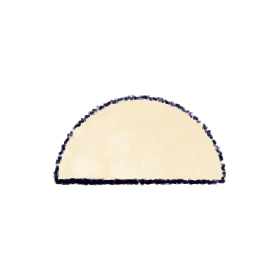
- Half-moon
- Cooked
- Steamed, boiled
Anatomy
Inside
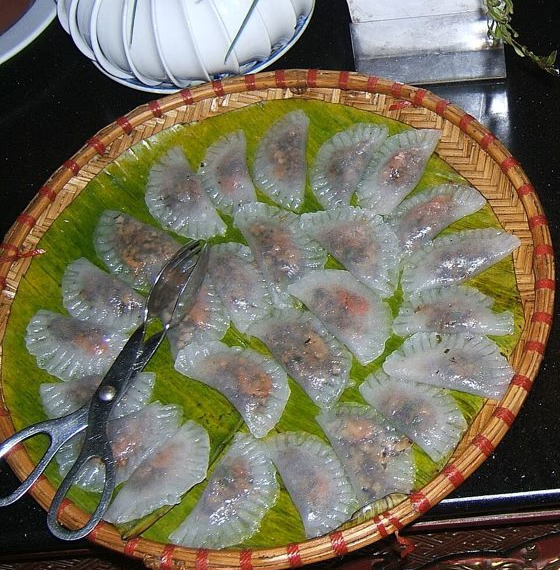
- Wrapper
- Starch doughTapioca translucent
- Filling
- Shrimp, pork
- Cooked
- Steamed, boiled
- Size
- About 4 cm across
Tastes of
- shrimp
- pork belly
- fish sauce
- chilli
Texture
- chewy, glassy
Field notes
Story
Chewy translucent tapioca dumplings wrapping shrimp and pork, sometimes steamed in banana leaf. Most associated with Huế, though Quảng Trị and Quảng Bình claim it too; an 1896 Saigon dictionary already names cakes of clear bột lọc starch.
- How to eat it
- Dip in sweet chilli fish sauce.
- When
- Street snack.
History
An 1896 Saigon dictionary names cakes of clear bột lọc starch (A, name and wrapper only). Most associated with Huế. Quảng Trị and Quảng Bình also claim it.
Did you know You can see the whole orange shrimp through the wrapper.
Range
Where
From Huế, Vietnam.
Pin · Central Vietnam (Huế–Quảng Trị–Quảng Bình), pinned at Huế; Huế origin is tradition, not documented · historical or cultural region, not a town
How sure we are
Evidence
Well established. An archaeological find or a primary source backs it.
We list 3 sources: 1 primary or archaeological, 1 legend, 1 unverified. How grading works.
First record Huỳnh Tịnh Của's Đại Nam quấc âm tự vị (Saigon, 1895-96) defines bánh lọc as translucent cakes of bột lọc (A)
Sources
- A
Đại Nam quấc âm tự vị, Tome II, PDF p. 497 (Wikisource transcription)
Primary, opened: under 'Trong' — "Bánh ― bánh lọc. Hai thứ bánh làm bằng bột lọc, trong suốt như gương." ("bánh trong, bánh lọc: two kinds of cake made of bột lọc [refined starch], transparent as a mirror"). Attests the…
Primary, opened: under 'Trong' — "Bánh ― bánh lọc. Hai thứ bánh làm bằng bột lọc, trong suốt như gương." ("bánh trong, bánh lọc: two kinds of cake made of bột lọc [refined starch], transparent as a mirror"). Attests the name bánh lọc and the translucent starch wrapper; does not mention filling or Huế. - L
Gia huấn ca (Wikisource); Quốc văn trích diễm 1930, p. 82
'Gia huấn ca' (traditionally attributed to Nguyễn Trãi, 15th c.): "Khéo là khéo bánh trong, bánh lọc" as a mark of a skilled wife. The attribution is disputed (likely a later, 18th-19th-c. text); also printed in Quốc văn trích diễm (1930).
- G
Bánh bột lọc (English Wikipedia); dulichviet.com.vn; Commons 'Bánh lọc Mỹ Chánh' photos
"They are said to have originated from Huế, as the city was once the imperial capital of the Nguyễn dynasty" — no source cited; Vietnamese web sources (tourism/commercial) repeat a Nguyễn-court origin without any…
"They are said to have originated from Huế, as the city was once the imperial capital of the Nguyễn dynasty" — no source cited; Vietnamese web sources (tourism/commercial) repeat a Nguyễn-court origin without any document and also mention Quảng Bình; bánh lọc Mỹ Chánh (béng sắn) is a Quảng Trị speciality.
Found by research and reviewed, October 2026.
The tagline and story are editorial; facts trace to the atlas research. History sources are from the atlas and not yet independently checked.
Family G