Ukadiche modak
उकडीचे मोदकukaḍīce modaksay oo-KAH-dee-cheh MOH-duk
Ganesha's favourite sweet.
- Region
- South Asia
- First record
- 1893 · Empires & migration
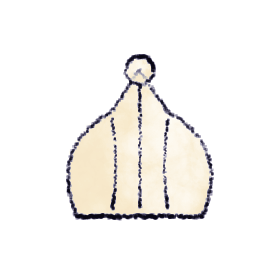
- Fold
- Purse, top-knot
- Cooked
- Steamed
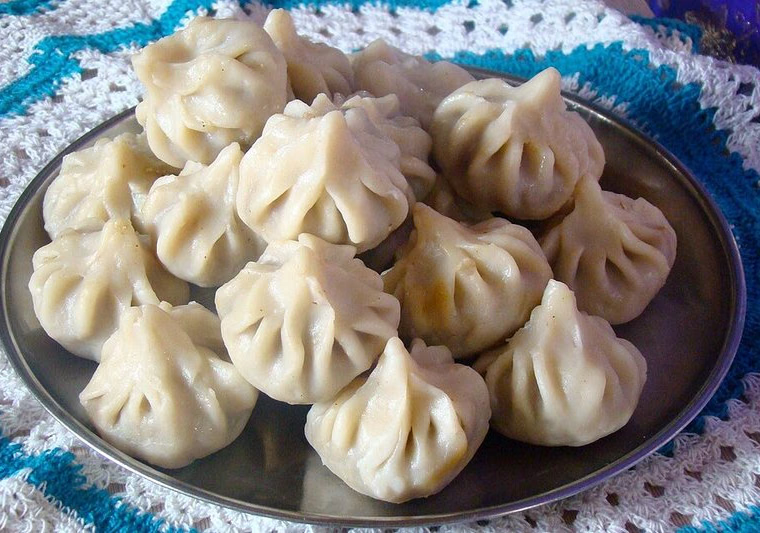
- Wrapper
- Rice doughRice-flour pleated
- Filling
- Coconut, jaggery, cardamom
- Cooked
- Steamed
- Size
- About 6 cm across
Tastes of
- coconut
- jaggery
- cardamom
- ghee
Texture
- soft, delicate
Field notes
Story
Pleated rice-flour dumplings filled with coconut, jaggery and cardamom. Offered in 21s at Ganesh Chaturthi, a festival made public by Tilak in 1893.
- How to eat it
- Warm, with a spoonful of ghee poured over the top.
- When
- Ganesh Chaturthi.
Did you know One of Ganesha's names is Modakapriya, "lover of modak".
Make it
Steamed rice-flour modak with coconut and jaggery
How to fold: Purse (gathered top)

1 Filling in the middle of the round
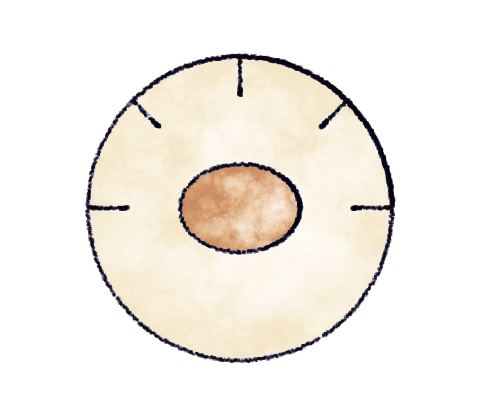
2 Lift the edge up all round
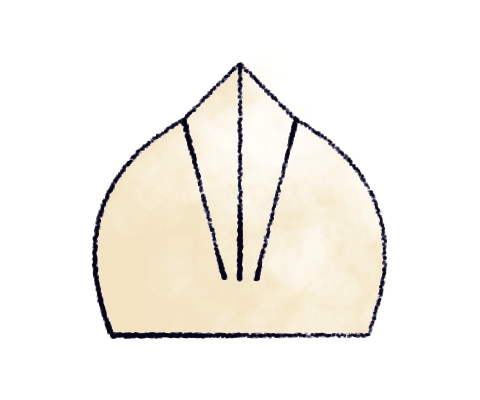
3 Pleat it as you turn, gathering to the top

4 Twist the top into a knot
Placeholder diagram. The atlas's illustrated fold animations will replace it.
Ingredients for 4
Filling
Dough (ukad)
To serve
Method
- Warm 1 tsp ghee in a heavy pan, add the coconut and stir over low heat for 2 minutes until it smells fragrant. · timer 2 min
- Add the jaggery and poppy seeds and keep stirring until the jaggery melts and the mixture turns sticky and moist but not wet. · timer 8 min
- Stir in the cardamom and nutmeg, take off the heat and let the filling cool completely.
- Bring the water to a boil with the salt and 1 tsp ghee.
- Turn the heat to low, tip in all the rice flour at once and stir fast until no dry flour is left.
- Cover the pan, take it off the heat and leave the dough to steam in its own heat. · timer 5 min
- While still warm, knead the dough with greased or wet hands until completely smooth and supple. Keep it covered with a damp cloth.
- Take a lime-sized ball of dough, press it into a thin cup with your thumbs, keeping the base slightly thicker than the rim.
- Pinch the rim into 9 to 13 small even pleats all round.
- Spoon about 1 tbsp of filling into the cup, gather the pleats together and twist them into a pointed tip. Seal any cracks with a wet finger.
- Repeat with the rest, covering the finished modak so they do not dry out. A greased modak mould can be used instead of hand-pleating.
- Line a steamer with a damp cloth, banana leaf or turmeric leaves, set the modak on it with space between them and dab each with a little water.
- Steam over medium heat until the dough looks glossy and slightly translucent. · timer 12 min
- Serve warm with a spoonful of ghee on top.
Notes. Ukadiche modak ("steamed modak") is the Marathi festival sweet most associated with Ganesh Chaturthi; households traditionally offer 21 of them to Ganesha. The dough should be thin and the pleats fine: practice helps, and a modak mould is a perfectly accepted shortcut. Use fresh coconut if possible; frozen grated coconut works, desiccated coconut gives a drier filling. Sugar can replace jaggery but loses the caramel note. Lining the steamer with turmeric (halad) leaves is a Konkan custom that perfumes the modak. Fried modak (talniche modak) use a wheat dough instead.
Written for the atlas from several sources, cross-checked: Ukadiche Modak - Marathi Recipe, Madhura Bachal (Madhura's Recipe); Modak Recipe | Easy Ukadiche Modak, Archana Hebbar (Hebbar's Kitchen). Not yet kitchen-tested.
Where
From Maharashtra. Popular in India.
- OriginMaharashtra (Konkan) · Marathi
Evidence
Reasonably sure. Reference works agree, but we have not yet found a dated or primary source.
The grade comes from the project's source report and has not yet been checked source by source. How grading works.
Notes from the research
Tilak made Ganesh Chaturthi a public festival in 1893 and modak spread widely. Japanese kangidan offered to Kangiten.
This entry is drawn from the World Dumpling Atlas, §6.10, the project's source report. Its grade, S secondary consensus, says how far that has been checked against a primary source.
The tagline and story are editorial; facts trace to the atlas research.
Family G
Kin
More rice dough (several origins)