
Grated root pudding with coconut milk, baked in an earth oven.
Vanuatu · first recorded 1913
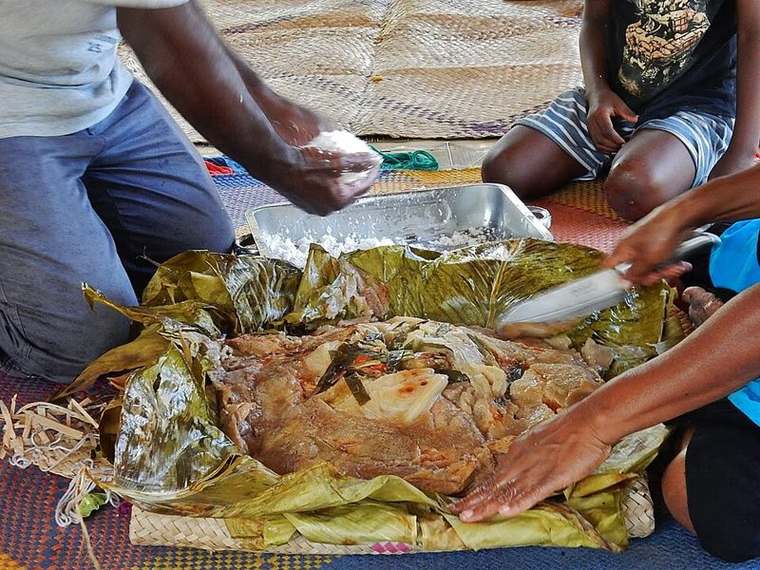 Photo Michael Coghlan from Adelaide, Australia · CC BY-SA 2.0 · Wikimedia Commons
- Dough
- Leaf-wrapped pudding
- Made with
- Grated yam, banana, manioc or taro with coconut milk; sometimes meat on top
- Cooked
- Baked
- Size
- GiantAn estimate, about 14 cm across: no source gives a measure yet.
- Note
- A borderline case: it stretches the definition of a dumpling.
Tastes of
- yam
- banana
- taro
- coconut milk
Field notes
Story
Vanuatu's national dish, a leaf-wrapped pudding of grated yam, banana, manioc or taro with coconut milk, sometimes with meat on top, baked in an earth oven or on hot stones. Sosor is a stuffed variant.
Did you know A traveller wrote in 1913 that "Lap-lap is the national dish".
Make it
Taro laplap with coconut milk (home-oven adaptation)
- Makes
- one parcel, cut into about 8 pieces
- Prep
- 30 min
- Cook
- 2 hours
- Level
- medium
- Fold
- leaf wrap
How to fold: Leaf wrap
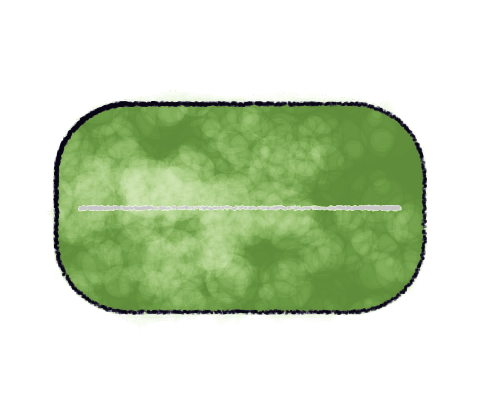
1 Lay out a softened leaf or husk
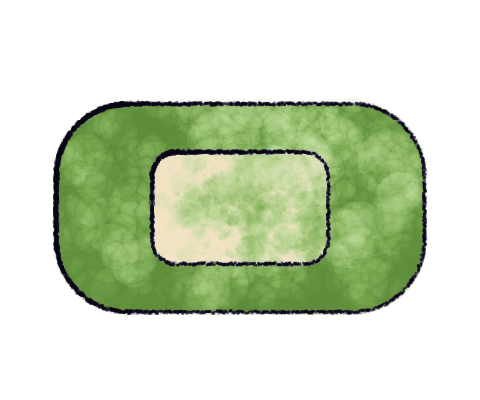
2 Spread the dough or batter in the middle
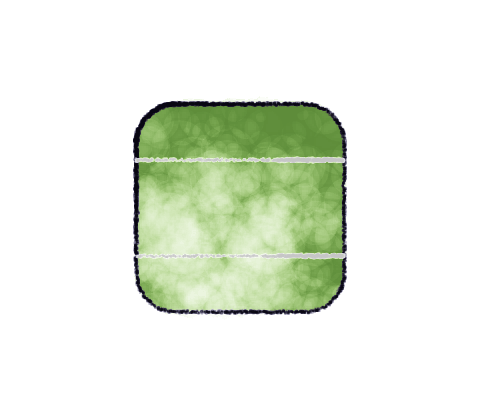
3 Fold in the long sides, then the ends
4 Tie the parcel and steam or boil it
Placeholder diagram. The atlas's illustrated fold animations will replace it.
Ingredients for 4
Pudding
Topping
Wrapping
Method
- Heat the oven to 180°C.
- Warm the banana leaves over a flame or in a hot pan until they are soft and bend without tearing.
- Peel the taro and grate it finely into a large bowl. Wear gloves if raw taro irritates your skin.
- Add the coconut milk and salt and mix to a thick, sticky paste.
- Lay the leaves out flat, overlapping, to make one large sheet.
- Spread the paste in an even layer in the middle of the leaves.
- If using toppings, lay the meat on the paste first and the vegetables on top of it.
- Pour a little more coconut milk over the top.
- Fold the leaves tightly over the filling to make a sealed parcel, tie it or wrap it in foil, and set it on a baking tray.
- Bake until the taro is cooked through and set, and any meat is tender. Allow the full time for a thick parcel.Wait 2 hours
- Unwrap, cut into portions and serve hot with more coconut milk poured over.
Sources
- Lap Lap Recipe - A Taste of Vanuatu, Ben Pierce Jones (Tastes from the Road)
- Laplap, ProMusa (Bioversity International)
Where
From Vanuatu.
Evidence
Strong evidence
Felix Speiser's 1913 book on his two years in the Western Pacific says plainly: "Lap-lap is the national dish". He describes yam or taro rubbed to a thick paste, wrapped in banana leaves, cooked between stones and finished with coconut milk. It's the earliest record we've found, and the dish is surely older.
Sources
- 1913Earliest record

Two Years with the Natives in the Western Pacific (London, 1913), p. 114
'Lap-lap is the national dish of the natives of the New Hebrides; quite one-fifth part of their lives is spent in making and eating lap-lap.' The cook rubs yam or taro on rough coral or a palm sheath into a thick paste, which is wrapped in banana…
- 1931

Pacific Manuscripts Bureau catalogue (ANU), search snippet only
Pacific Manuscripts Bureau catalogue lists New Hebrides mission photographs captioned as boys 'scraping yam for laplap / lap lap' (PHOTO 60, item 261, Tangoa mission slides, 1931-33).
Confirmed by web search; not yet read in full
The tagline and story are editorial; the facts trace to the research above. How we weigh evidence
Family H
Kin
More leaf-wrapped grain parcels (separate inventions)


