Songpyeon
송편songpyeonsay SONG-pyun
Half-moons steamed on pine needles.
- Region
- Korea
- First record
- 1611 · Renaissance & print
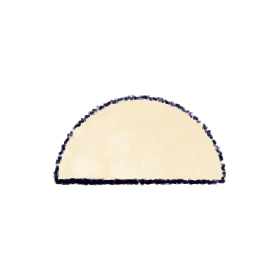
- Fold
- Half-moon
- Cooked
- Steamed
Anatomy
Inside
Field notes
Story
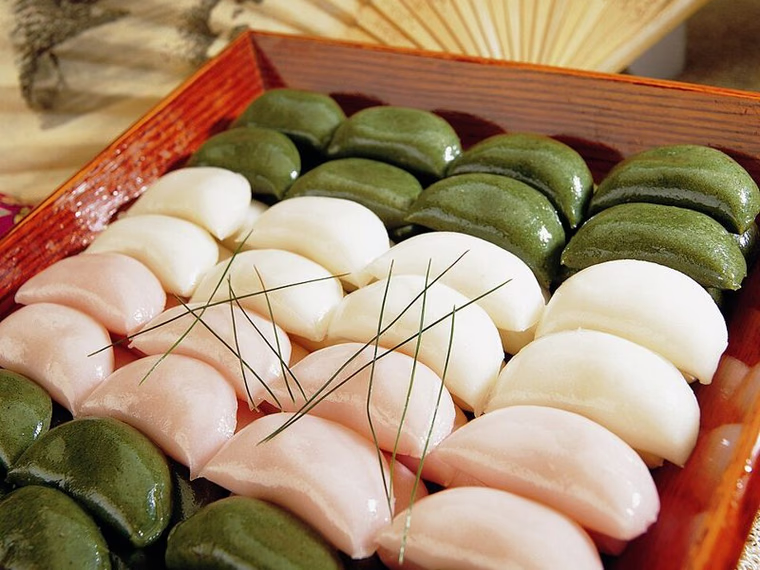
Half-moon rice cakes steamed on a bed of pine needles. Today they hold sesame-honey, chestnut or beans; 19th-century fillings also included meat, fish and water dropwort.
- How to eat it
- Eat at room temperature, often made together as a family.
- When
- Chuseok today; historically also a spring food, and the main Chuseok food only since about the 1970s.
Did you know A saying holds that whoever makes beautiful songpyeon will have a beautiful child.
Range
Where
From Korea.
Pin · Korea (peninsula centroid); no regional origin is documented. The 1611 text was written in Hamyeol (Iksan, N. Jeolla) but describes seasonal food generally. · country, not a town
- OriginKorea · country · Korean
How sure we are
Evidence
Fairly sure. A dated text records it by 1611.
We list 4 sources: 3 dated texts, 1 legend. How grading works.
First record Heo Gyun, Domun daejak (1611), names 松餠 as a spring seasonal food (D, via Kim Yong-gap 2018)
Sources
- D
Heo Gyun, Domun daejak (in Seongso bubugo), written 1611 in exile at Hamyeol, lists 松餠 (songbyeong) as a spring seasonal food. Earliest record identified by the paper.
- D
추석음식 송편과 반달을 똑 닮은 고흥 모시잎송편 (Monthly Gukga Yusan Sarang, 2015-09-01)
Yorok (要錄, c. 1680): first Hangul name 송푠; white-rice-flour cake steamed in layers with pine needles, then rinsed.
- D
추석 대표 음식으로서 송편의 발달 배경, Table 1
Later dated records: Seongho saseol (c. 1740) 'steamed with pine needles = songbyeong'; Nongga wollyeongga (1816) 오려송편 in the 8th-month verse (first link to Chuseok); Dongguk sesigi (1849) half-disc 松餠 for the 2nd-month…
Later dated records: Seongho saseol (c. 1740) 'steamed with pine needles = songbyeong'; Nongga wollyeongga (1816) 오려송편 in the 8th-month verse (first link to Chuseok); Dongguk sesigi (1849) half-disc 松餠 for the 2nd-month servants' day and early-rice songpyeon sold in the 8th month; Seungjeongwon ilgi 1784. - L
Half-moon shape explained by the Samguk sagi story of a turtle shell under King Uija of Baekje: 'Baekje is a full moon, Silla a new moon'. The story is about the kingdoms, not songpyeon; the link to songpyeon is folk etymology.
Found by research and reviewed, October 2026.
Notes from the research
Heo Gyun's Domun daejak (1611) lists it as a spring food (D). The half-moon shape story is a legend.
The tagline and story are editorial; facts trace to the atlas research. History sources are from the atlas and not yet independently checked.
Family G