
A fluffy bun bursting with barbecued pork.
Guangdong · first recorded 1919
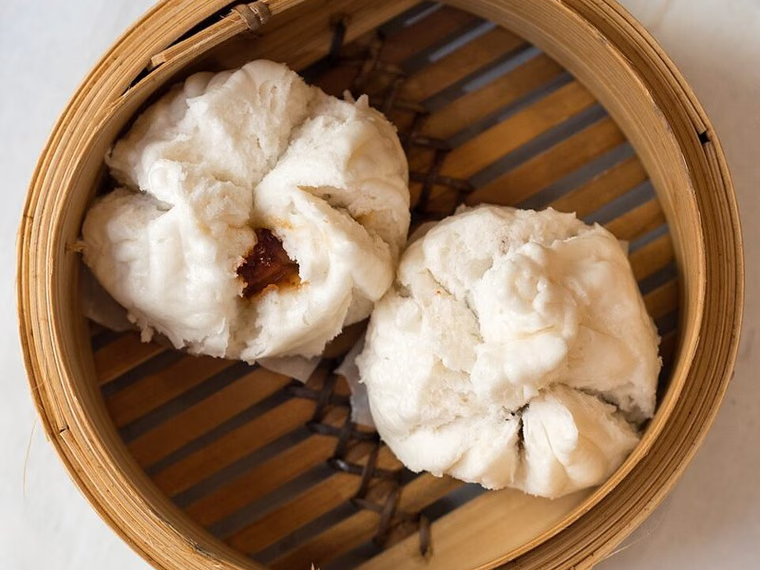 Photo Takeaway · CC BY-SA 3.0 · Wikimedia Commons
- Wrapper
- Yeasted wheat doughLeavened, split top
- Filling
- Barbecue pork
- Cooked
- Steamed
- Size
- About 8 cm acrossA bun gathered from an 11 cm round is about 0.75 times as wide once risen: about 8 cm.
Tastes of
- barbecue pork
- oyster sauce
- honey
Texture
- cottony bun
- sticky filling
Field notes
Story
Leavened bun filled with sweet-savoury Cantonese barbecued pork. Since baking powder arrived in the late 1930s, the top splits open as it steams; older buns were closed.
- How to eat it
- Peel off the paper base and eat by hand.
- When
- Yum cha.
Did you know Hawaii's manapua descends from char siu bao brought by Chinese immigrants.
Make it
Steamed char siu bao (Cantonese barbecue pork buns)
- Makes
- 12 buns
- Prep
- 60 min
- Cook
- 30 min
- Level
- medium
- Fold
- top knot
How to fold: Purse (gathered top)
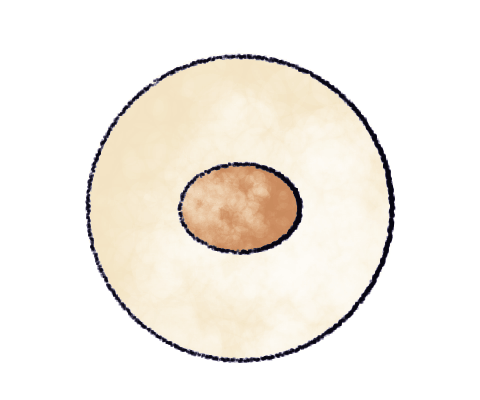
1 Filling in the middle of the round
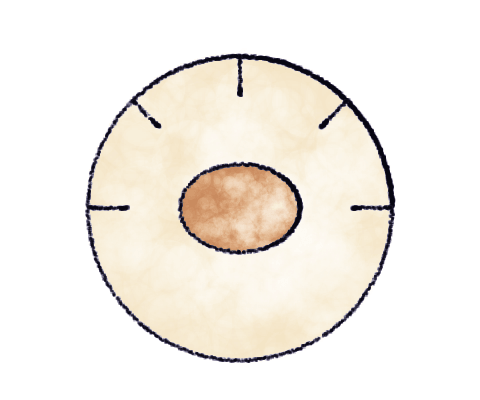
2 Lift the edge up all round
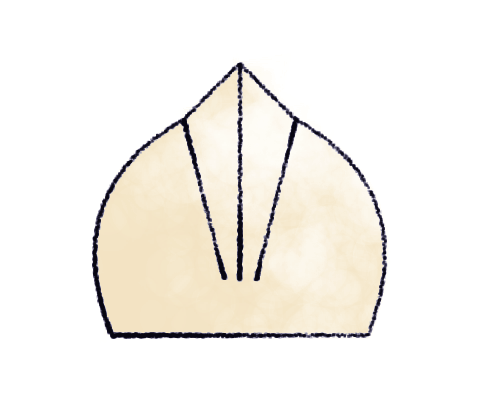
3 Pleat it as you turn, gathering to the top
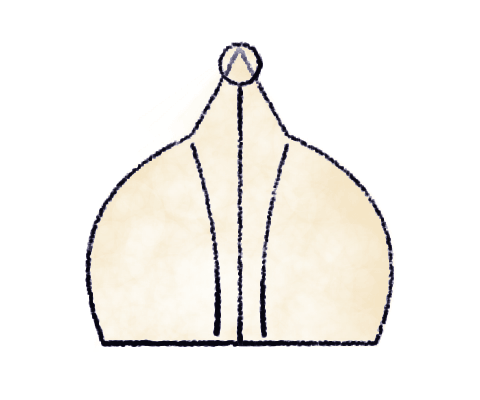
4 Twist the top into a knot
Placeholder diagram. The atlas's illustrated fold animations will replace it.
Ingredients for 4
Dough
Filling
Method
- Stir the yeast into the warm water and leave it for a few minutes.Timer 5 min
- Mix the flour, cornflour and sugar in a large bowl. Add the yeast water and the 30 ml oil and bring together into a dough.
- Knead until smooth and soft.Timer 10 min
- Cover the bowl and leave the dough in a warm place until doubled in size.Wait 2 hours
- Meanwhile make the filling. Fry the shallot in 1 tbsp oil over medium heat until soft.Timer 2 min
- Add the stock, oyster sauce, both soy sauces, sugar and sesame oil and bring to a simmer.
- Stir in the cornflour and water mixture and cook until the sauce is thick and glossy, like honey.Timer 2 min
- Take off the heat, fold in the diced char siu and let the filling cool completely. It should be stiff enough to hold its shape on a spoon.
- Sprinkle the baking powder over the risen dough and knead it in thoroughly. If the dough feels dry, wet your hands with a teaspoon of water as you work.Timer 3 min
- Cover and rest the dough while you cut twelve 10 cm squares of baking parchment.Timer 15 min
- Divide the dough into 12 equal pieces of about 50 g and keep them covered.
- Press or roll each piece into a round about 11 cm across, leaving the centre thicker than the edge.
- Put a good tablespoon of filling in the middle, pleat the edge up around it and pinch the pleats together at the top.
- Sit each bun on a parchment square, pleats facing up, and set them in a steamer at least 3 cm apart. Steam in batches if needed.
- Bring the water to a full rolling boil before the steamer goes on. Steam over high heat with the lid on, and do not lift it during cooking.Timer 12 min
- Serve hot. Peel off the paper and eat with your hands.
Sources
- Steamed BBQ Pork Buns (Char Siu Bao), Judy (The Woks of Life)
- Char Siu Bao (Steamed BBQ Pork Buns), Huy Vu (Hungry Huy)
- Char Siu Bao (Chinese Pork Bun Classic), Tony Tan (Gourmet Traveller)
Where
From Guangdong.
- OriginGuangzhou · Lingnan · Cantonese
Evidence
Reference works only
Nobody knows when it was invented. In 2019 the Guangzhou dim sum master He Shihuang said it is "at least 100 years old", and that baking powder, introduced in the late 1930s, gave it today's split top. A popular story credits a Guangzhou teahouse with making it famous around 1920, but we've only seen it repeated without a source. No dated record of the bun itself has turned up yet.
Sources
- 1920s–30s

Char siu bao is one of the four kings of Cantonese yum cha; context of the 1920s–30s Guangzhou teahouse boom.
- c. 1920

search-result summary (Baidu Baike 广东叉烧包 / blogs)
Popular claim: c. 1920 Datong teahouse (大同茶楼), Taiping South Road, Guangzhou, launched a large 'three-star bun' that made the char siu bao famous. Unsourced; seen only in a search summary.
Not yet checked against the original
- late 1930s
Dim sum master He Shihuang (何世晃): when char siu bao was invented 'cannot be known', but it is 'at least 100 years old' and certainly the work of Cantonese chefs. Early buns were closed, birdcage-shaped (禾谷嘴); in the late 1930s baking powder was…
The tagline and story are editorial; the facts trace to the research above. How we weigh evidence
Family A


