
Crescent dumplings eaten at midnight on Chinese New Year’s Eve.
North China · first recorded 250 CE
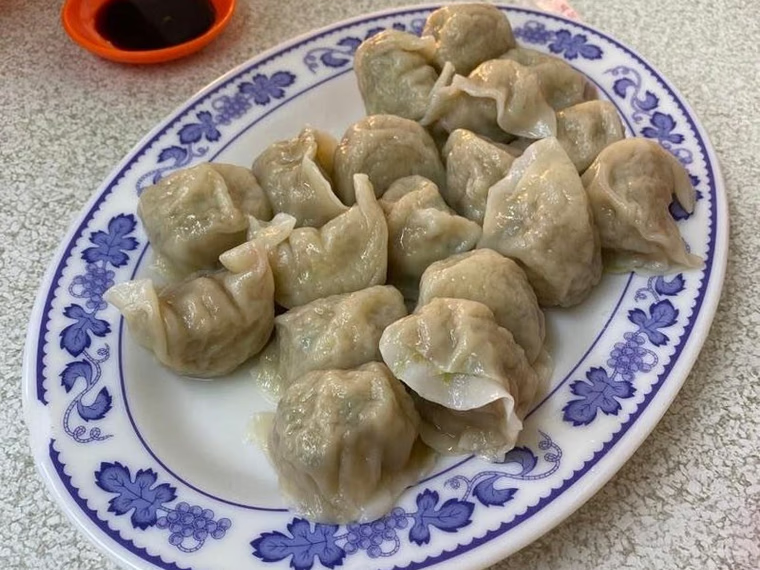 Photo Yeepunchmen · CC BY-SA 4.0 · Wikimedia Commons
- Wrapper
- Wheat doughFlour-water dough
- Filling
- Pork-cabbage, pork-chive, lamb-carrot, egg-chive, fish (Shandong)
- Cooked
- Boiled, steamed, pan-fried
- Size
- About 6.5 cm acrossAn 8 cm round pleated into a crescent is about 0.8 times as long: about 6.5 cm.
Tastes of
- pork
- napa cabbage
- garlic chive
- ginger
- black vinegar
Texture
- chewy wrapper
- juicy filling
Field notes
Story
Northern China's everyday and festive dumpling, shaped like a crescent or a silver ingot. Physical Tang-era jiaozi survive from the Astana tombs at Turpan, the oldest dumplings ever excavated.
- How to eat it
- Dip in black vinegar with garlic or chilli oil; eat whole.
- When
- Lunar New Year's Eve; Winter Solstice in the north.
Did you know Families sometimes hide a coin in one dumpling; whoever finds it is said to be lucky all year.
Make it
Pork and napa cabbage jiaozi (boiled)
- Makes
- about 40 dumplings
- Prep
- 90 min
- Cook
- 10 min
- Level
- medium
- Fold
- crescent pleat
How to fold: Crescent pleat
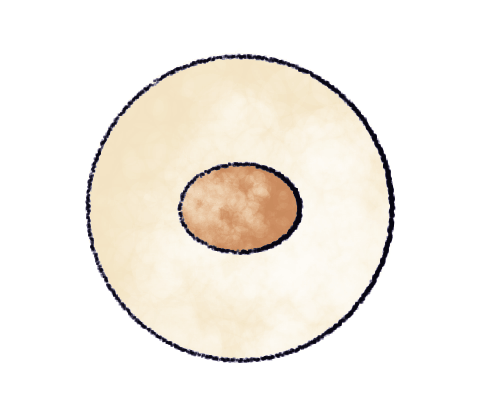
1 Filling in the middle of the round
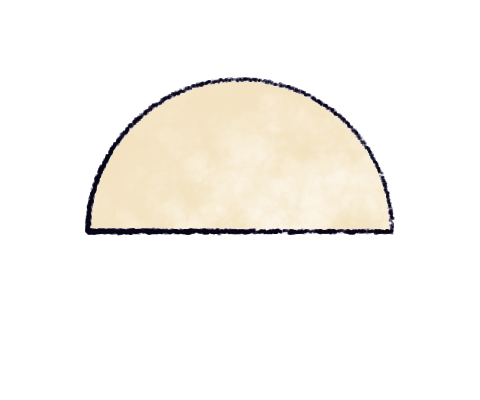
2 Fold in half and pinch the centre shut
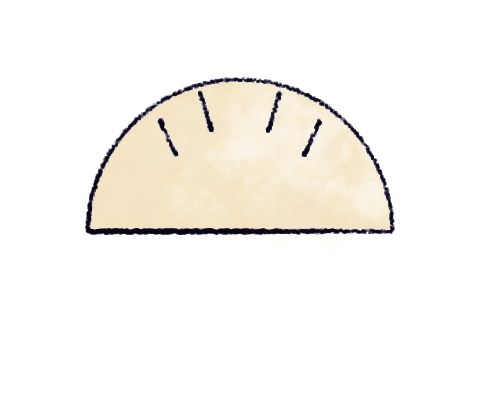
3 Make small pleats on the front edge only
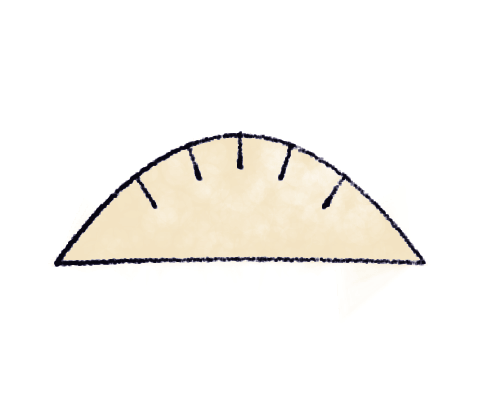
4 The pleats curve it into a crescent
Placeholder diagram. The atlas's illustrated fold animations will replace it.
Ingredients for 4
Dough
Filling
To serve
Method
- Stir the salt into the flour, add the cold water little by little and bring it together into a rough dough.
- Rest the dough under a bowl for 10 minutes, then knead until smooth.Timer 10 min
- Cover and rest the dough at least 30 minutes; it can rest up to 2 hours.Timer 30 min
- Chop the cabbage very finely, toss with 1 tsp salt and leave 15 minutes.Timer 15 min
- Squeeze the cabbage hard in a clean cloth until almost no water drips out.
- Put the pork, ginger, soy sauce, rice wine, salt and pepper in a bowl and beat in one direction with chopsticks.
- Add the water a spoonful at a time, beating after each addition, until the pork is sticky and has absorbed it all.
- Toss the cabbage with the neutral oil, then fold it and the spring onions and sesame oil into the pork.
- Roll the dough into a long rope and cut it into about 40 pieces of 11–12 g. Keep them covered.
- Flatten each piece and roll it into an 8 cm round, thinner at the edge than in the middle.
- Put a heaped teaspoon of filling in the centre, fold the round in half and pinch the top.
- Pleat one side of the edge towards the middle, pressing each pleat against the flat back, to make a crescent. Set on a floured tray.
- Bring a large pot of water to a rolling boil and add about 20 dumplings, stirring gently so they don't stick.
- When it boils again, pour in 125 ml cold water. Repeat twice more (the "three boils"); the dumplings are done when they float and puff.Timer 8 min
- Lift out with a slotted spoon. Mix the vinegar, garlic and chilli oil and serve as a dip. Cook the second batch.
Sources
- Dumpling Wrappers (饺子皮), Maggie Zhu (Omnivore's Cookbook)
- Mom's Best Pork Dumplings, Maggie Zhu (Omnivore's Cookbook)
- Pork and Chive Dumplings (猪肉韭菜水饺), Maggie Zhu (Omnivore's Cookbook)
- Chinese Pork Dumplings, CiCi Li
Where
From North China. Popular in all China, diaspora.
- OriginNorth China Plain · Han
- Claimed originNanyang (Zhang Zhongjing legend) · Central Plains · Han
- Evidence found atAstana cemetery Turpan · Gaochang/Turkestan
Evidence
Strong evidence
The strongest evidence is physical: Tang-dynasty jiaozi found at Turpan. Written records add older names for the dumpling in the Han and the Tang. The story that Zhang Zhongjing invented them is legend.
Sources
- 3rd c.

广雅 (as cited in Chinese press articles)
Zhang Yi's Guangya (Wei, 3rd century) is said by modern writers to mention the food; the passage is only quoted through secondary sources and was not checked against the text.
Confirmed by web search; not yet read in full
- 150–219

Eating dumplings during winter solstice
Legend: the Eastern Han physician Zhang Zhongjing, back home in Nanyang, boiled mutton, pepper and herbs in ear-shaped dough ('jiao'er', tender ears) to cure frostbitten ears; tied to eating dumplings at the winter solstice.
Confirmed by web search; not yet read in full
- Gaochang to TangEarliest record

Archaeobotanical study of food from the Astana cemeteries, Turpan: the dumplings were made of bread wheat (Triticum aestivum) with foxtail millet (Setaria italica), the cakes of bread wheat alone. The paper does not date the tomb itself; the…
Confirmed by web search; not yet read in full
- 618–907
China's history of dumplings, from archaeological finds to modern tables
Xinhua feature: about 20 Tang dumplings have been excavated at the Astana tombs, often in ceramic or wooden vessels by the head of the dead; Wang Renxiang (CASS) says they closely match today's in size and shape. Chinese excavations at Astana began in 1959.
Confirmed by web search; not yet read in full
- 1147
东京梦华录 / 梦粱录 (as cited in Chinese press)
Song texts write the dumpling as 角子 / 角儿 ('horn'): 'water-crystal jiao'er' and 'fried jiaozi' in the Dongjing menghua lu (1147), 'camel-hump jiaozi' in the Mengliang lu; reported by Chinese press articles, not checked against the books.
Confirmed by web search; not yet read in full
The tagline and story are editorial; the facts trace to the research above. How we weigh evidence
Family A
Kin


Compare


