← Map · Turkey, the Caucasus and Iran
Khinkali
ხინკალიkhink'alisay khin-KAH-lee
Twisted topknots full of spiced broth.
SLDDated textFamily B · Steppe / Silk Road manti

About
Shepherd's food from the eastern Georgian mountains (Pshavi, Khevsureti, Tusheti), heavily pleated and twisted into a knot. A Mongol origin is sometimes suggested but contested.
Tastes of
- beef and pork
- cumin
- coriander
- black pepper
Texture
- thick, chewy
- soupy
How to eat it
Hold by the knot, bite, slurp the broth, and leave the knot (kudi) on the plate.
When
Feasts (supra) and everyday.
Did you know Diners leave the knots on the plate and count them to see who ate the most.
History
Shepherd food. Mongol 13th-c. theory (BBC Travel 2019, SCMP) is contested. City kalakuri style is later.
Sources
- Sen.wikipedia: origin in the mountain provinces (Pshavi, Khevsureti); the Mongol 13th-century story is presented as legend; no dated source for the dish.. Khinkali, Wikipedia (en)
- Ska.wikipedia: preparation 'originates in the mountainous regions of eastern Georgia' (Mokhevians, Pshavians, Mtiulians, Khevsurs); no dates; footnotes are two 2006 books (P. Nasmyth, Georgia: In the Mountains of Poetry; Petrosian & Underwood, Armenian Food).. ხინკალი, Wikipedia (ka)
- Sru.wikipedia: the word is given an Avar etymology; origin regions Pshavi, Mtiuleti, Khevsureti; no dated source.. Хинкали, Wikipedia (ru)
- SPeer-reviewed comparison of Georgian khinkali and Turkish hinkal (abstract page only): no statement on the earliest written record. (2024). A gastronomic product specific to the Caucasus region culinary: Khinkali (ხინკალი) & Hinkal, Journal of Multidisciplinary Academic Tourism 9(2), 179–189, Y. Oğan, M. A. Keskin, Z. Bulut (2024)
- DDescription of the food of the mountaineers of the Tush-Pshav-Khevsur district: '... хинкали, въ родѣ галушекъ, ежедневная пища — сыръ, масло и молоко; вонючее копченое мясо составляетъ ихъ лакомство. На праздникахъ пекутъ въ золѣ ... када, начиненная саломъ и кусками копченаго мяса. Хевсуры предпочитаютъ ...'. The running head reads 'Тушино-Пшаво-...'. The words before 'хинкали', the article title and its author were not visible. 'Галушки' are boiled dough dumplings; a filling is not mentioned here. Read as a Google Books full-text search snippet (books feed); the page image was not viewed. (1855). Записки Кавказскаго отдѣла Императорскаго Русскаго географическаго общества (1855 volume), Kavkazskii otdel IRGO (Google Books, full view)
- DAccount of Khevsur customs for the dead: '... хинкала (хлѣбца, въ родѣ галушекъ съ начинкою). Для не исполнившаго этого дѣти скатываютъ съ горы камень, приговаривая: „да скатится такъ съ горы твоя корова“ ...'; nearby: 'Въ Пирикительской Хевсуретіи все селеніе варитъ ...'. Here khinkali are glossed as a dumpling WITH A FILLING. Article title and author not visible. Read as a Google Books full-text search snippet (books feed); the page image was not viewed. (1890). Записки Кавказскаго отдѣла Императорскаго Русскаго географическаго общества (1890 volume), Kavkazskii otdel IRGO (Google Books, full view)
- DVazha-Pshavela, drama 'from the life of the Pshavs': 'ჩემ ჯალაფნი ხინკალს აკეთებენ, ჩვენს გავიაროთ' (my household are making khinkali, let us go to ours), and a verse called a saying of the old people: 'ვაჰმე ხინკალო, ხინკალო, მემრე მარწყვასთან წოლაო'. The Wikisource page carries no date; ka.wikipedia 'ვაჟა-ფშაველა' dates the drama 'მოკვეთილი' to 1894. (1894). მოკვეთილი (Mokvetili), drama in five acts, Vazha-Pshavela; text on Georgian Wikisource
- DVazha-Pshavela, poem dated 1903 on Wikisource: 'სახინკლე ხორცი საზამთროდ / საკმაო უნდა ყველასა. / რა სიცოცხლეა იმისი, / ვინც არ ჰხვრეპს ხინკლის წვენასა?!' (everyone needs enough khinkali meat for the winter; what life has he who does not slurp the juice of khinkali?). Meat filling and the broth inside: the dish as known today. Also his story 'შობის წინა ღამე ტყეში' (dated 1902 on Wikisource): 'ხინკლიანს სუფრას' (a table with khinkali) and the song 'დაგძინებია, ხინკალო'. (1903 (poem); 1902 (story)). შემოდგომა მთაში (Autumn in the mountains); შობის წინა ღამე ტყეში, Vazha-Pshavela; texts on Georgian Wikisource
- DSulkhan-Saba Orbeliani's dictionary has the headword but NOT as a dumpling: 'ხინკალი — დუმის შაშხი ZABCD. See also: აპოხტი' (khinkali: cured/dried fat-tail). The portal's text reproduces I. Abuladze's edition (Tbilisi, Merani, 1991) and gives the author's dates as 1658–1725. (before 1725 (author d. 1725; edition 1991)). ლექსიკონი ქართული (Sitqvis kona), entry ხინკალი, Sulkhan-Saba Orbeliani; National Parliamentary Library of Georgia dictionary portal
- SModern ethnographic dictionary entry: 'ხინკალი — აღმოსავლეთ საქართველოს მთიანეთში გავრცელებული საჭმელი. ხინკალი წარმოადგენს დაკეპილ ან მანქანაში გატარებულ ხორცს, რომელიც გახვეულია თხელი პურის ცომის მასაში და მოხარშულია წყალში ...' (a dish of the east Georgian highlands: chopped or minced meat wrapped in thin dough and boiled in water); no dated source given.. ქართული მატერიალური კულტურის ეთნოგრაფიული ლექსიკონი (Ethnographic dictionary of Georgian material culture), entry ხინკალი, National Parliamentary Library of Georgia dictionary portal
Found by research in October 2026; awaiting editorial review.
Where
- OriginPasanauri (Pshavi/Khevsureti/Tusheti) · Mountainous Georgia · town or village · Georgians
Related
Beef and pork khinkali (kalakuri, city style)
How to fold: Purse (gathered top)

1 Filling in the middle of the round
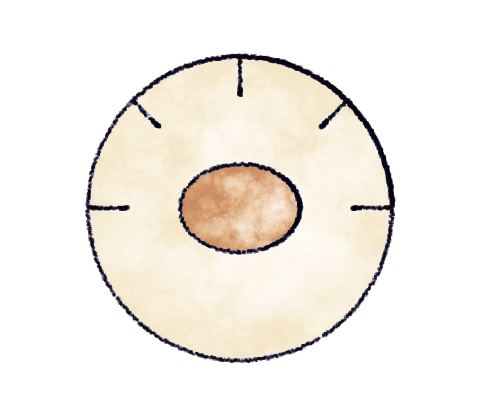
2 Lift the edge up all round
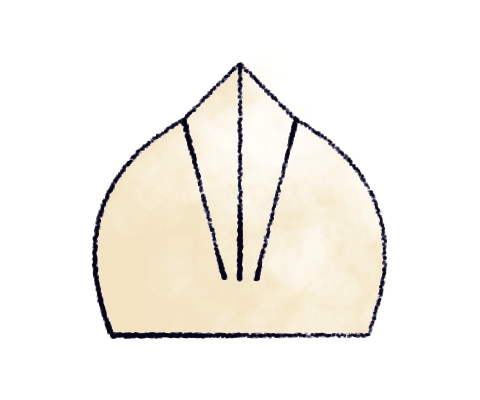
3 Pleat it as you turn, gathering to the top

4 Twist the top into a knot
Placeholder diagram. The atlas's illustrated fold animations will replace it.
Ingredients for 4
Dough
Filling
To cook
To serve
Method
- Mix the flour and salt in a bowl, add the egg if using, then pour in the water gradually and bring it together.
- Knead hard for about 10 minutes until the dough is firm, smooth and fairly stiff. · timer 10 min
- Wrap the dough and rest it at room temperature. · timer 30 min
- Meanwhile, put the beef, pork, onion, spices and salt in a bowl and mix well with your hand.
- Work in the cold water or broth a little at a time until the mixture is loose and wet but still holds together. This liquid becomes the broth inside.
- Stir in the chopped herbs, then chill the filling while you roll the dough.
- Roll the dough out about 2 mm thick and cut rounds about 10 cm across; roll each round thinner again to about 14 cm, keeping the centre slightly thicker than the edge.
- Put a heaped tablespoon of filling in the middle of a round.
- Lift the edge and make small overlapping pleats all the way round, gathering them towards the top. Aim for 18 to 20 pleats; fewer is fine.
- Pinch and twist the pleats together at the top into a firm knob so no juice can escape. Trim any very large knob.
- Set each dumpling on a floured tray, knob up, and repeat with the rest.
- Bring a large pot of water to a boil and add the salt.
- Lower in 6 to 8 dumplings, stir gently once so they do not stick, and boil until they float, then about 8 minutes more. · timer 10 min
- Lift out with a slotted spoon and serve at once, dusted with black pepper. Cook the rest in batches.
- To eat, hold the knob, bite a small hole, sip the broth, then eat the rest. Leave the knob on the plate.
Notes. Khinkali come from the Georgian highlands (Pshavi, Khevsureti, Tusheti, Mtiuleti). Mountain style (mtiuluri) uses only meat, onion, salt, pepper and caraway, often with lamb in the mix; city style (kalakuri) adds coriander and parsley. Pleat counts of 19 or more are a point of pride, but sources disagree on the "right" number. Vegetarian versions use sulguni or other brined cheese mixed with butter, or mushrooms, or mashed potato. Khinkali are eaten with the hands and served only with pepper; the uneaten knobs (kudi) are often lined up to count how many each person ate. Leftovers are good fried the next day.
Written for the atlas from several sources, cross-checked: Khinkali, Georgian Recipes (georgianrecipes.net); Khinkali: Georgia's Legendary Soup Dumplings, Georgian Eats (Tbilisi); Khinkali (Georgian meat-filled dumplings), Whats4Eats. Not yet kitchen-tested.
The tagline and story are editorial; facts trace to the atlas research. History sources are from the atlas and not yet independently checked.
Family B