
A broth hidden in a pleated purse.
Nanxiang, Jiading · first recorded 1871
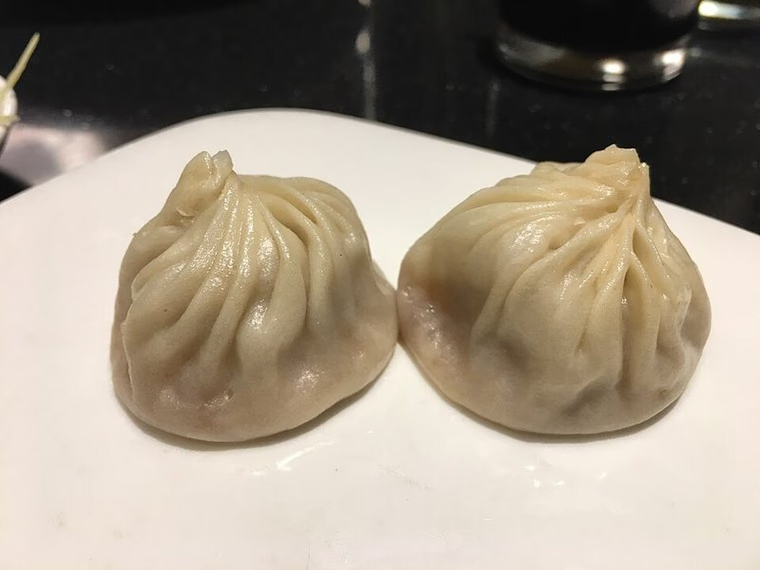 Photo FASTILY · CC BY-SA 4.0 · Wikimedia Commons
- Wrapper
- Wheat doughLight leaven; Thin, ~14+ pleats
- Filling
- Pork + pork-skin aspic; crab roe
- Cooked
- Steamed
- Size
- 4.5–5 cm acrossAn 8–9 cm round pleated into a purse is about 0.55 times as wide: about 4.5 cm.
Tastes of
- pork
- ginger
- rich broth
- black vinegar
Texture
- paper-thin skin
- molten soup
Field notes
Story
Soup dumpling from Nanxiang outside Shanghai, traditionally dated to around 1871. Pork filling is mixed with set pork-skin aspic that melts into soup as it steams. Listed as Chinese national intangible heritage (item 943, 2014).
- How to eat it
- Lift onto a spoon, nip the skin, sip the soup, then eat with ginger and vinegar.
- When
- Breakfast and teahouse snack.
History
Huang Mingxian, Rihuaxuan, c. 1871. First called "Nanxiang da rou mantou" (Shanghai gov't, SCMP). Wuxi/Suzhou/Changzhou versions are sweeter and larger.
Did you know Makers judge them by their pleats; many shops aim for at least 14 folds.
Make it
Pork xiaolongbao (Shanghai soup dumplings)
- Makes
- about 36 dumplings
- Prep
- 2 hours
- Cook
- 2.2 hours
- Level
- hard
- Fold
- purse
How to fold: Purse (gathered top)

1 Filling in the middle of the round
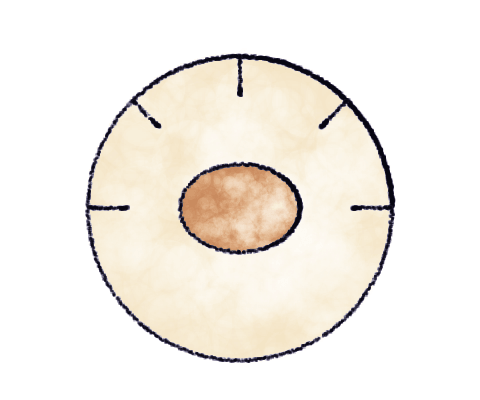
2 Lift the edge up all round
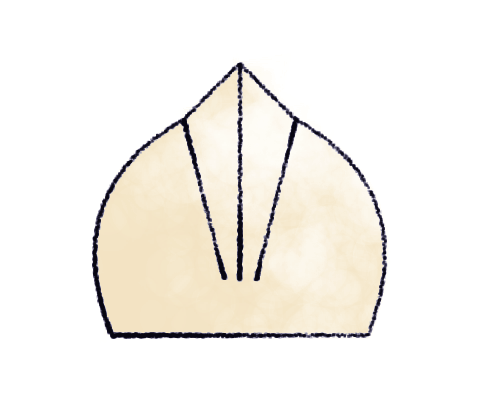
3 Pleat it as you turn, gathering to the top
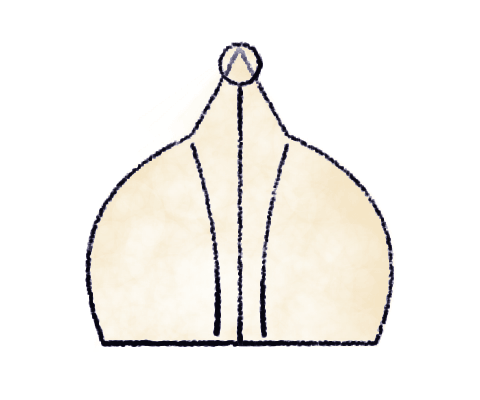
4 Twist the top into a knot
Placeholder diagram. The atlas's illustrated fold animations will replace it.
Ingredients for 4
Aspic
Filling
Dough
To serve
Method
- Day 1. Cover the pork skin with cold water, bring to the boil, boil 3 minutes, then drain and rinse.Timer 3 min
- Scrape off any fat and hairs from the skin and cut it into thin strips.
- Put the skin in a clean pot with the 1 litre of water, ginger, spring onion, wine and star anise and bring to the boil.
- Simmer gently, partly covered, until the skin is very soft and the liquid is cloudy and lightly sticky.Wait 2 hours
- Strain, discarding the solids (or blitz the skin back in for a firmer jelly), add the salt and pour into a shallow dish.
- Cool, then refrigerate until firmly set, ideally overnight.Wait 8 hours
- Day 2. Soak the sliced ginger and spring onion in the hot water, then strain and cool the flavoured water.Timer 10 min
- Stir the pork in one direction, adding the ginger-onion water a little at a time until absorbed and the meat is sticky.
- Stir in the soy sauce, wine, sugar, salt, pepper and sesame oil.
- Chop 200 g of the set aspic into tiny dice and fold it into the meat. Chill the filling while you make the dough.
- Stir the boiling water into the flour and salt, then add the cold water and knead until smooth and elastic.Timer 10 min
- Cover the dough and rest it.Timer 30 min
- Roll the dough into a log and cut about 36 pieces of 12 g each, keeping them covered.
- Roll each piece into a round about 8-9 cm across, thinner at the edge than the centre.
- Put a heaped tablespoon (about 15 g) of cold filling in the centre of a wrapper.
- Pleat the rim all the way round, turning the dumpling as you go (aim for 14-18 folds), and twist the top closed.
- Set the dumplings on a steamer lined with parchment, cabbage leaves or a damp cloth, 2-3 cm apart.
- Steam over fiercely boiling water until the skins are translucent.Timer 9 min
- Serve at once with black vinegar and ginger threads. Lift each one gently onto a spoon, bite a small hole and sip the soup first.
Sources
- Xiao Long Bao (Soup Dumplings), Elaine Luo (China Sichuan Food)
- 灌汤小笼包 内附猪皮冻详细做法 (soup xiaolongbao with pork-skin jelly), Yang's Food (Xiachufang)
Where
From Nanxiang, Jiading (Shanghai). Popular in Taiwan (Din Tai Fung), global.
Pin · Nanxiang, Jiading (third pass: point from Wikidata Q866006)
- OriginNanxiang Jiading · Jiangnan · Han
Protected name
China national intangible cultural heritage · 传统面食制作技艺(南翔小笼馒头制作技艺) (Nanxiang xiaolongbao making)
Item 943, code Ⅷ-160 (extension item) · registered 2014
Area: Jiading District, Shanghai
Fourth national batch, 2014; Shanghai municipal list 2007 (Ⅷ-8). The ihchina.cn record dates the method to 1871 (Huang Mingxian, Rihuaxuan).
Evidence
Good evidence
The story, as told by the Shanghai government and the South China Morning Post, starts with Huang Mingxian of Rihuaxuan in Nanxiang around 1871, where the bun was first called "Nanxiang da rou mantou". The neat tale of a single inventor is restaurant lore. The versions from Wuxi, Suzhou and Changzhou are larger and sweeter.
Sources
- 1871

Chinese press and the Shanghai gazetteer 上海名镇志 (as reported)
In 1871 (Tongzhi 10) Huang Mingxian of the Rihuaxuan snack shop in Nanxiang made his big-meat mantou smaller, with more filling and thinner skin: the Nanxiang xiaolong mantou. Second-generation maker Wu Xiangsheng opened at the City God Temple around 1900.
Confirmed by web search; not yet read in full
- 1871

World Dumpling Atlas §6.2 and §7.6
The single-inventor story of Huang Mingxian is restaurant lore; some writers derive the technique from Kaifeng soup buns (see Kaifeng guantang bao).
Not yet checked against the original
- 2014
Nanxiang xiaolong mantou making was on Shanghai's first municipal intangible-heritage list (2007) and joined the fourth national list in 2014; Xinmin Evening News report.
Confirmed by web search; not yet read in full
The tagline and story are editorial; the facts trace to the research above. How we weigh evidence
Family A
Kin


Compare


