
Mandu soup for the New Year.
Korea · first recorded 1670
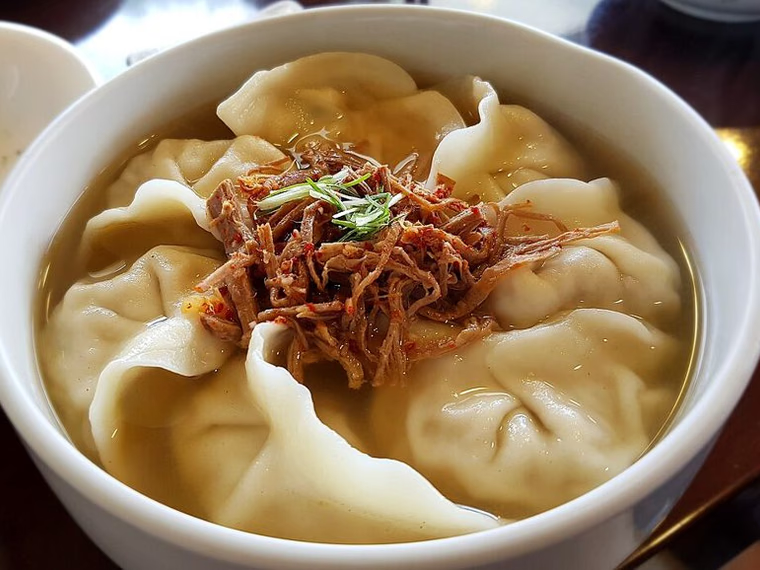 Photo Trainholic · CC BY-SA 4.0 · Wikimedia Commons
- Wrapper
- Wheat dough
- Filling
- Mandu in beef/anchovy broth with egg
- Cooked
- Boiled, in soup
- Size
- MediumAn estimate, about 6 cm across: no source gives a measure yet.
Tastes of
- beef broth
- anchovy broth
- egg
Field notes
Story
Korean soup of mandu in beef or anchovy broth with egg. At New Year it is made with tteok. The royal court called it byeongsi.
- How to eat it
- As a soup, with tteok at New Year.
- When
- New Year.
Make it
Manduguk (mandu soup in beef broth)
- Makes
- 2 large bowls
- Prep
- 10 min
- Cook
- 25 min
- Level
- easy
- Fold
- half moon
How to fold: Half-moon

1 Roll a thin round of dough

2 Spoon the filling into the middle

3 Fold it in half over the filling
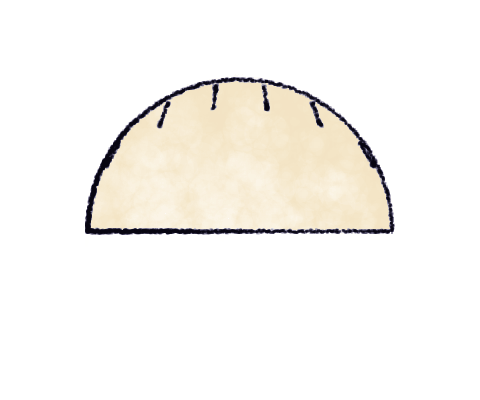
4 Press the edge firmly to seal it
Placeholder diagram. The atlas's illustrated fold animations will replace it.
Ingredients for 2
Broth
Soup
Garnish
Method
- Cut the beef into thin bite-sized pieces.
- Put the beef and the soup soy sauce in a medium pot and stir over medium-high heat until the meat is browned.Timer 3 min
- Pour in the water, bring to the boil and skim off the foam.
- Cover, turn the heat down to medium and simmer.Timer 10 min
- Meanwhile beat the egg and pour it into a lightly oiled non-stick pan over medium heat, tilting to make a thin sheet.
- Cook the egg on both sides until just set, without browning. Cool it, then cut it into thin strips or small diamonds.Timer 2 min
- Slice the spring onion into thin strips.
- Stir the garlic into the broth and season with salt and pepper.
- Add the mandu, stirring gently so they do not stick to the bottom of the pot.
- Boil until all the mandu float, then lower the heat and cook a little longer.Timer 2 min
- Ladle the soup into bowls and top with the spring onion, egg and seaweed.
Sources
- Manduguk (Korean Dumpling Soup), Hyosun Ro (Korean Bapsang)
- Tteok Mandu Guk (Rice Cake Soup with Dumplings), Hyosun Ro (Korean Bapsang)
Where
From Korea.
- OriginKorea · Korean
Evidence
Good evidence
The earliest record we've found is in the Eumsik dimibang, written around 1670, where it appears under another name, seokryutang. At the royal court it was called byeongsi.
Sources
- c. 1670Earliest record

The Eumsik dimibang, the oldest surviving Korean cookbook in Hangul, written around 1670 by Jang Gye-hyang, has mandu recipes, among them sungeo-mandu (slices of grey mullet wrapped round a tofu filling and simmered in shrimp-salted broth).
Confirmed by web search; not yet read in full
- c. 1670

The atlas dates manduguk to the Eumsik dimibang (c. 1670) under the name seokryutang; this pass did not find the seongnyutang recipe in the book itself (the Jang Gye-hyang culture centre serves it among Eumsik dimibang dishes).
Not yet checked against the original
- Undated
The Encyclopedia of Korean Culture: byeongsi and seongnyutang (pomegranate soup), made the same way as today's manduguk, were probably Joseon names for dumpling soup; when the names came into use is uncertain.
Not yet checked against the original
The tagline and story are editorial; the facts trace to the research above. How we weigh evidence
Family B


