
Palm-sized dumplings of potato, cheese, meat or cabbage.
Mari El · first recorded 1889
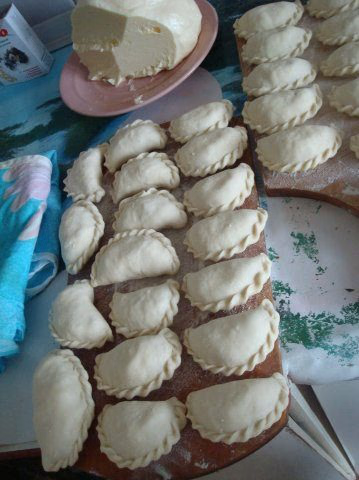 Photo S.Micheeva · CC BY 3.0 · Wikimedia Commons
- Wrapper
- Wheat or potato doughFilled; large (4.5 cm to palm-sized)
- Filling
- Wheat, sometimes with rye; potato, cottage cheese, meat, cabbage
- Cooked
- Boiled
- Size
- 4.5–9 cm acrossThe record gives 4.5 cm up to palm-sized (about 9 cm); the middle is about 7 cm.
Tastes of
- potato
- cottage cheese
- meat
- cabbage
Texture
- large
Field notes
Story
Large Mari dumplings, from 4.5 cm across to palm-sized, in a wheat dough that sometimes includes rye. Fillings are potato, cottage cheese, meat or cabbage. They are boiled and eaten at once, not frozen.
- How to eat it
- Straight from the pot.
Did you know The name joins "pod", cauldron, and "kagyl", pie, so it means something like boiled pirozhki.
Make it
Mari podkogylyo with potato and curd cheese
- Makes
- about 24 large dumplings
- Prep
- 70 min
- Cook
- 30 min
- Level
- easy
- Fold
- half moon
How to fold: Half-moon

1 Roll a thin round of dough
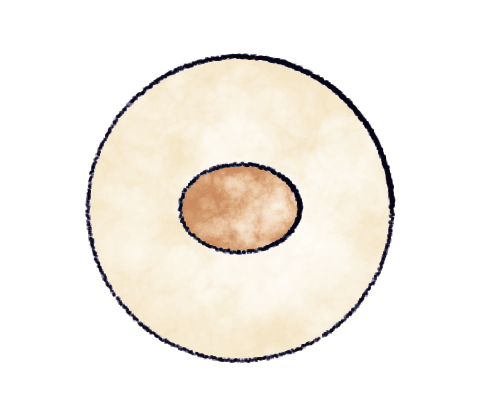
2 Spoon the filling into the middle
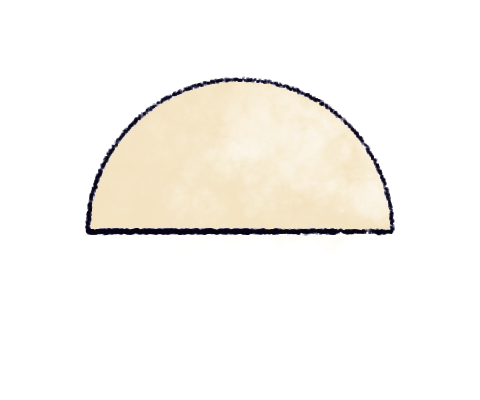
3 Fold it in half over the filling
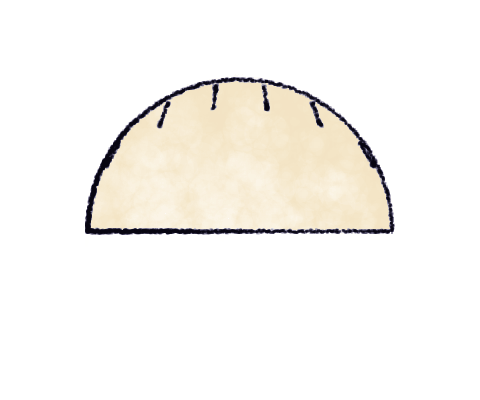
4 Press the edge firmly to seal it
Placeholder diagram. The atlas's illustrated fold animations will replace it.
Ingredients for 4
Dough
Filling
To serve
Method
- Mix the flour and salt, add the eggs and water and work it into a firm dough.
- Knead until smooth, then wrap the dough and let it rest.Timer 30 min
- Peel and quarter the potatoes and boil them in salted water until soft.Timer 20 min
- Rub the curd cheese through a sieve so it is smooth.
- Drain the potatoes and mash them hot with the butter.
- Mix in the curd cheese, salt and pepper until even, and let the filling cool.
- Roll the dough into a rope and cut it into pieces of about 20 g.
- Roll each piece into a thin round, keeping the rest covered.
- Put a spoonful of filling on one half of the round.
- Fold the other half over and press the edges flat together to seal, without plaiting them.
- Bring a large pot of salted water to the boil and add the dumplings in batches.
- Once they float, cook them 2 minutes more.Timer 2 min
- Lift out and serve at once with the butter, sour cream and spring onions.
Sources
- A huge dumpling with potatoes and cottage cheese from Russia's Republic of Mari El (RECIPE), Yulia Mulino (Gateway to Russia)
- Подкоголи, Иван Антропов (Food.ru)
- Подкогыльо, Алексей Марчук (Повар.ру)
Where
From Mari El.
- OriginMari El · Volga-Ural · Mari
Evidence
Good evidence
In 1889 the ethnographer I. N. Smirnov listed pelmeni, "izi kogol" in Mari, among the hot dishes of the Mari people. It shares a root with podkogylyo, whose name means roughly "cauldron pies", but it isn't quite the same word, and Smirnov doesn't say what went inside. The story that a goddess's love of a giant dumpling created the Mari people is a legend.
Sources
- 1889Earliest record

Черемисы: историко-этнографическій очеркъ (Kazan, 1889), p. 82
p. 82: "Пища черемисъ въ своихъ существенныхъ чертахъ не отличается отъ русской. Горячими кушаньями являются щи (штей), похлебки съ лукомъ, картофелемъ (похлебка), ляшка (супъ съ клецками изъ ржаного тѣста), пермени (изи коголь). За горячими…
- 1967
Name is Finno-Ugric: Mari под, пад "котёл" + когыльо, кагыль "пирожок, пирог" (cf. Estonian kukkel). Footnoted to Kazantsev 1967, p. 234. Kazantsev's text itself was not opened.
Not yet checked against the original
- 2018
Modern dated events: a monument to podkogylyo was set up in Yoshkar-Ola in 2018; the dish represented Mari El in the 'Вкусная карта России' project in 2019; 'Podkogylyo Day' is marked on 26 November.
The tagline and story are editorial; the facts trace to the research above. How we weigh evidence
Family C


