
Half-moon dumplings filled with anything from sour cherries to sauerkraut.
Ukraine · first recorded 1798
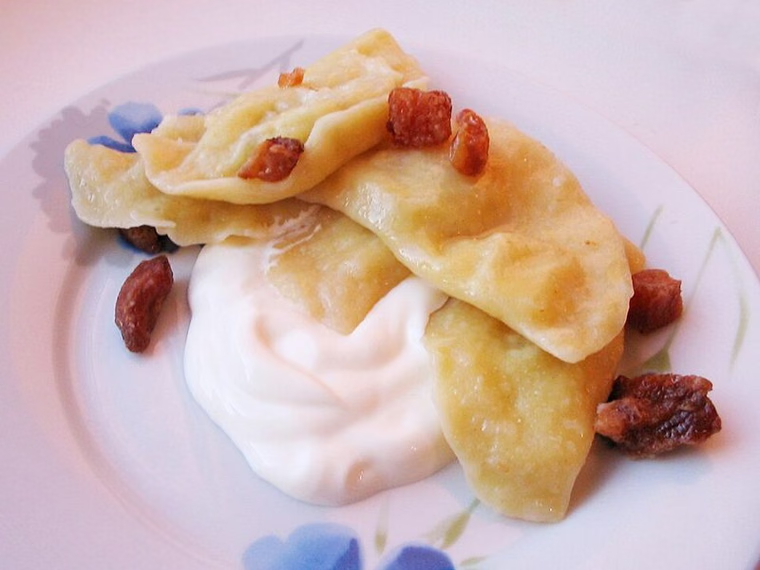 Photo Kagor ; cropped by Off-shell · CC BY-SA 3.0 · Wikimedia Commons
- Wrapper
- Wheat doughHalf-moon
- Filling
- Potato, quark (tvorog), sauerkraut, cherries
- Cooked
- Boiled
- Size
- 7–8 cm acrossA round folded into a half-moon is as long as its diameter: about 7.5 cm.
Tastes of
- potato
- quark
- sour cherry
- sour cream
Texture
- tender
Field notes
Story
Ukrainian boiled pockets whose name comes from the verb "to boil". Fillings range from potato and quark to sour cherries.
- How to eat it
- Top with sour cream and fried onion, or sugar for cherry ones.
- When
- Sviata Vecheria (Christmas Eve, 12 dishes).
Did you know Cherkasy had a monument to a varenyk, put up in 2006 and taken down in 2013.
Make it
Varenyky with potato and fried onion
- Makes
- about 40 varenyky
- Prep
- 90 min
- Cook
- 15 min
- Level
- medium
- Fold
- half moon
How to fold: Half-moon
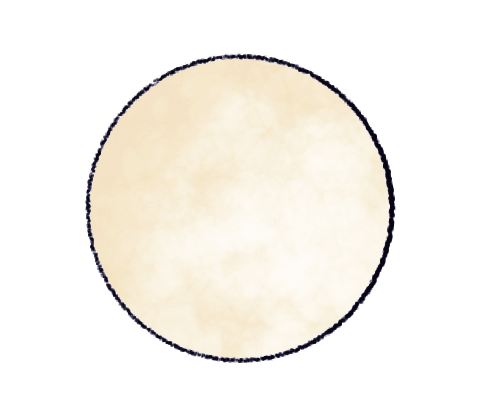
1 Roll a thin round of dough
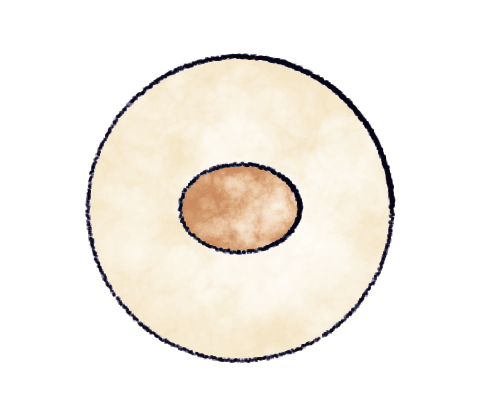
2 Spoon the filling into the middle
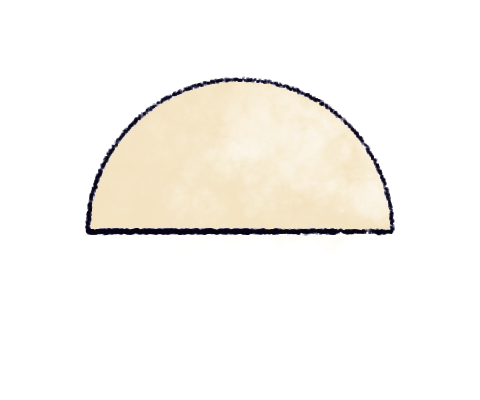
3 Fold it in half over the filling
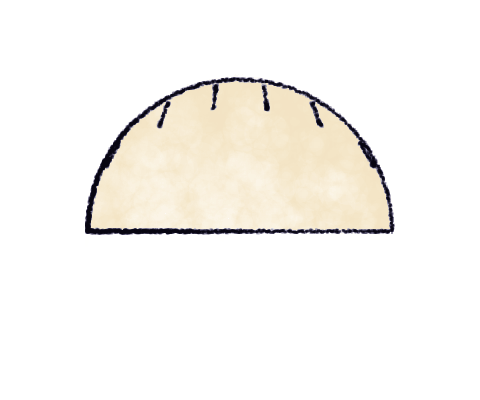
4 Press the edge firmly to seal it
Placeholder diagram. The atlas's illustrated fold animations will replace it.
Ingredients for 4
Dough
Filling
To serve
Method
- Beat the egg with the water and salt, then stir in the flour until a shaggy dough forms.
- Knead on a floured surface until smooth, firm and elastic.Timer 6 min
- Cover the dough and let it rest.Timer 30 min
- Cut the potatoes into chunks and boil in salted water until completely soft.Timer 15 min
- Meanwhile, fry the onions in the oil over medium heat, stirring often, until deep golden.Timer 15 min
- Drain the potatoes well and mash them smooth while hot.
- Stir a third of the fried onions into the mash with the salt and pepper. Taste, then leave to cool completely.
- Roll half the dough to about 2 mm thick, keeping the rest covered.
- Cut rounds about 7–8 cm across with a glass.
- Put a heaped teaspoon of filling in the middle of each round.
- Fold into a half-moon and pinch the edge firmly shut, pressing out the air.
- Lay the varenyky on a floured cloth, not touching. Re-roll the scraps and repeat with the rest of the dough.
- Bring a wide pot of well-salted water to the boil.
- Cook about 10 at a time. Once they float, boil 1–2 minutes more.Timer 2 min
- Lift out with a slotted spoon and toss with the butter so they do not stick.
- Top with the remaining fried onions and serve with sour cream.
Sources
- Stuffed Ukrainian pasta (varenyky), Olia Hercules (SBS Food)
- Ukrainian Potato Varenyky, Alexandra Shytsman (The New Baguette)
- Varenyky (Ukrainian Dumplings), Yuliia Stsepeleva (Recipes From Europe)
- Вареники з картоплею (classic potato varenyky), 24 Канал
Where
From Ukraine. Popular in Russia, Canada.
- OriginUkraine · Ukrainians
Evidence
Good evidence
The name first appears in print in Kotliarevsky's mock-epic Eneida, published in St Petersburg in 1798, where "wheaten vareniki, white" are among the Trojans' treats. The word comes from "to boil". A food historian notes earlier written mentions, from 1619, under the older word pyrohy, so 1798 marks the earliest record of the name, not the start of the dish.
Sources
- 1798Earliest record
Енеїда, Частина III (Твори, т. 1, 1922 edition), Wikisource
Earliest dated use of the word: Kotliarevsky's mock-epic Eneida lists 'Вареники пшенишні, білі' among the Trojans' treats (Part III, st. 118; galushky appear in Part II, st. 13). Parts I–III were first printed in St Petersburg in 1798.
- 1798
Коли і як з'явилися вареники: експерт розвіяв найпопулярніші міфи
Food historian dates the name 'вареники' to Kotliarevsky's Eneida (1798); earlier written mentions (1619) are under the word 'пироги'; places the dish's emergence in Ukraine in the 15th–16th c. (estimate, no text).
- Undated
Їжа — Енциклопедія Сучасної України
National encyclopedia: 'it is believed' vareniki and holubtsi were borrowed from China via Middle Eastern peoples (unsourced diffusion claim, not a date).
The tagline and story are editorial; the facts trace to the research above. How we weigh evidence
Family C
Kin


Compare

