
Half-moons of potato, cheese and onion.
Poland · first recorded 1682
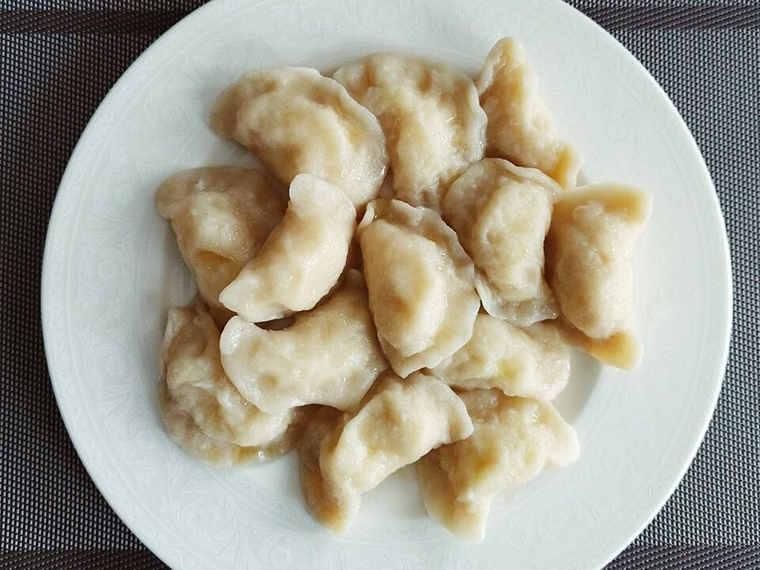 Photo Aw58 · CC BY-SA 4.0 · Wikimedia Commons
- Wrapper
- Wheat doughHalf-moon
- Filling
- Ruskie (potato-twaróg), kapusta-grzyby, mięso, blueberry, strawberry
- Cooked
- Boiled, pan-fried
- Size
- 7–8 cm acrossA round folded into a half-moon is as long as its diameter: about 7.5 cm.
Tastes of
- potato
- twaróg cheese
- fried onion
- skwarki
Texture
- soft
- buttery, crisp edges when fried
Field notes
Story
Poland's national dumpling. The first printed recipes appear in Czerniecki's 1682 cookbook (sweet, and veal kidney). The famous ruskie (potato and curd cheese) filling came later.
- How to eat it
- Top with fried onion and butter or sour cream.
- When
- Wigilia (Christmas Eve); Kraków's August festival.
History
First recipes in Czerniecki's 1682 Compendium Ferculorum (sweet, plus veal kidney, nutmeg; no potato). The 14th-c. Vita of Hyacinth doesn't mention pierogi. "Święty Jacku z pierogami!" saying.
Did you know Poles say "Święty Jacku z pierogami!" ("St Hyacinth and his pierogi!") after a legend about the saint.
Make it
Pierogi ruskie (potato and twaróg pierogi)
- Makes
- about 50–60 pierogi
- Prep
- 90 min
- Cook
- 15 min
- Level
- medium
- Fold
- half moon
How to fold: Half-moon

1 Roll a thin round of dough
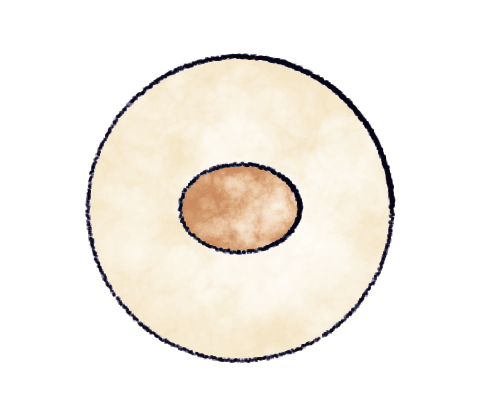
2 Spoon the filling into the middle
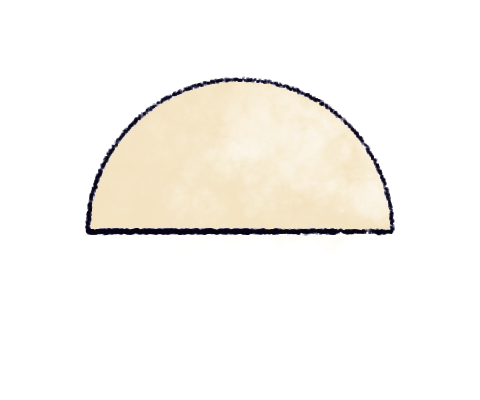
3 Fold it in half over the filling
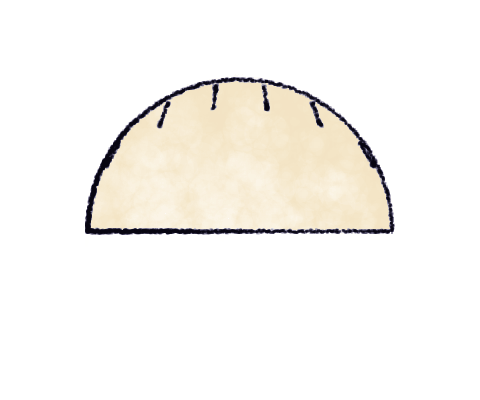
4 Press the edge firmly to seal it
Placeholder diagram. The atlas's illustrated fold animations will replace it.
Ingredients for 4
Dough
Filling
To serve
Method
- Boil the peeled potatoes in salted water until soft.Timer 20 min
- Meanwhile, fry the diced onion in the butter over medium heat until soft and golden.Timer 10 min
- Drain the potatoes and mash or rice them while hot. Let them cool a little.
- Crumble in the twaróg, add the fried onion, salt and plenty of pepper, and mix. Taste; the filling should be well seasoned. Let it cool completely.
- For the dough, mix the flour and salt, then pour in the hot water and oil and stir with a spoon until it comes together.
- When cool enough to handle, knead until soft, smooth and elastic.Timer 8 min
- Cover the dough with an upturned bowl and let it rest.Timer 30 min
- Roll a quarter of the dough thin, about 2 mm, keeping the rest covered.
- Cut rounds about 7–8 cm across with a glass.
- Put a heaped teaspoon of filling in the middle of each round.
- Fold over into a half-moon and pinch the edges firmly closed, pressing out any air. Crimp or fold the edge into a rope pattern if you like.
- Lay them on a floured cloth, not touching. Re-roll the scraps and repeat.
- For the topping, fry the onions in the butter slowly until deep golden.Timer 15 min
- Bring a wide pot of salted water to the boil and add a splash of oil.
- Cook about 12 pierogi at a time. Once they float, boil 2–3 minutes more.Timer 3 min
- Lift out with a slotted spoon and spoon over the buttery onions. Serve with sour cream or bacon if you like.
- Leftovers can be fried in butter until golden the next day.
Sources
- Pierogi ruskie, Ania (AniaGotuje.pl)
- Pierogi ruskie, Kasia and Zosia Pilitowskie (Kukbuk)
- Pierogi Ruskie with Potato, Farmer Cheese, Black Pepper and Brown Butter, Michał Korkosz (Rozkoszny)
- Potato and Cheese Pierogi (Pierogi Ruskie), Polish Housewife
Where
From Poland. Popular in US, Canada.
- OriginPoland · Poles
Evidence
Strong evidence
The first recipes appear in Czerniecki's Compendium Ferculorum of 1682, among them sweet versions and one with veal kidney and nutmeg; no potato yet. The popular story that Saint Hyacinth brought pierogi to Poland in 1238 is legend: his fourteenth-century biography doesn't mention them at all.
Sources
- 1238

Legend: in 1238 Saint Hyacinth (Jacek Odrowąż) saved the harvest of Kościelec near Kraków and the villagers thanked him with pierogi; another version has him feeding the hungry after the Tatar raid of 1241. The 14th-century Life of Hyacinth by…
Confirmed by web search; not yet read in full
- 1682Earliest record

Stanisław Czerniecki's old Polish pierogi
Stanisław Czerniecki's Compendium ferculorum (Kraków, 1682), the first cookbook printed in Polish, has several pierogi recipes: the first, in the meat chapter, with veal kidney; most of the others sweet, filled with fruit, in the chapter on dairy…
Confirmed by web search; not yet read in full
- 1682
Old Polish cookbooks: Compendium ferculorum or Collection of Dishes (1682)
The book itself: Compendium ferculorum albo Zebranie potraw, Kraków, printing house of Jerzy and Mikołaj Schedel, 1682; 333 recipes in three chapters of 111. Modern critical edition by the Wilanów museum (Monumenta Poloniae Culinaria, vol. I).
Confirmed by web search; not yet read in full
- Undated

Pierogi kościeleckie (Lista Produktów Tradycyjnych)
Poland's register of traditional products lists 'pierogi kościeleckie' and ties them to the story of Saint Jacek's visit to Kościelec in 1238; a registration of the tradition, not a dated record of the dish.
Not yet checked against the original
The tagline and story are editorial; the facts trace to the research above. How we weigh evidence
Family C
Kin


Compare


