Kreplach
קרעפּלעךkreplachsay KREP-lukh
Mercy wrapped around judgement.
SLDDated text, with a legend attachedFamily C · Slavic & Baltic boiled pocket

- First record
- 1843 · Empires & migration
- Fold
- Pyramid, leaf-wrapped
- Cooked
- Boiled, in soup
Anatomy
Inside
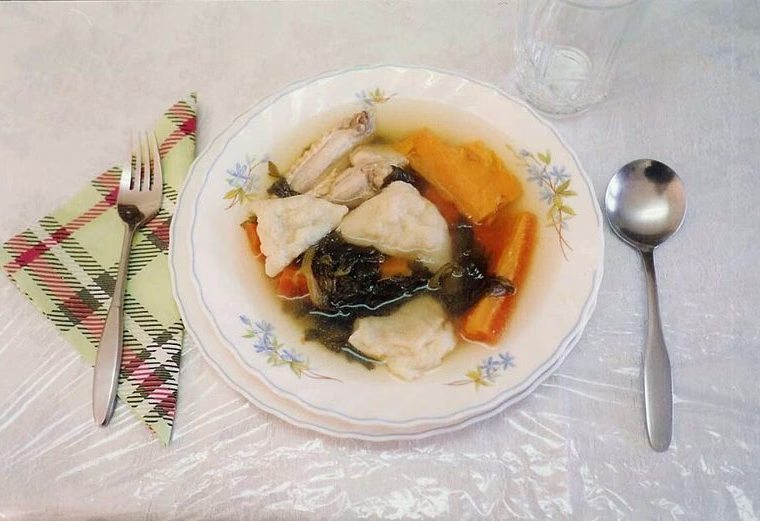
Field notes
Story
Ashkenazi triangular dumplings of meat, chicken or potato, served in chicken soup. They may descend from Venetian stuffed pasta that reached Germany in the 14th century.
- How to eat it
- In golden chicken soup.
- When
- Eve of Yom Kippur, Purim, Hoshana Rabbah.
Did you know In Hasidic symbolism the dough (mercy) covers the meat (judgement).
Range
Where
From Ashkenazi (Germany/Eastern Europe). Popular in US, Israel.
Pin · Ashkenaz (Rhineland, Worms) · historical or cultural region, not a town
How sure we are
Evidence
Fairly sure. A dated text records it by 1843. Part of its origin story is legend.
We list 14 sources: 9 dated texts, 5 secondary. How grading works.
First record Chayei Adam 134:1, Vilna edition of 1843/44 (work first printed 1810): cheese-filled "kreplich" counted as a cooked dish beside boiled noodles (D); first found, earlier uses of the word are for a fried pastry
Strongest sources
- D
Chayei Adam, Shabbat and Festivals 134:1
Law code, rules for the meal before Tisha b'Av: 'כגון מיני קמחין שקורין פארפיל או לאקשין אסור לאכלן כשבשלן אחד רכה ואחד עבה וכן קרעפליך הממולאין בגבינה הוי ב' תבשילין' (e.g. the flour dishes called farfel or lokshen may…
Law code, rules for the meal before Tisha b'Av: 'כגון מיני קמחין שקורין פארפיל או לאקשין אסור לאכלן כשבשלן אחד רכה ואחד עבה וכן קרעפליך הממולאין בגבינה הוי ב' תבשילין' (e.g. the flour dishes called farfel or lokshen may not be eaten when cooked one thin and one thick; likewise kreplich filled with cheese count as two cooked dishes). Filled kreplich are classed as a cooked dish (tavshil) next to boiled noodles. Sefaria's text is from the Vilna 1843 and 1844 editions; Sefaria's index gives composition 1790–1810 and first publication Vilna 1810. Whether the sentence is already in the 1810 first edition was not checked. - D
Leket Yosher, vol. I (Orach Chayim) 34
Leket Yosher, a record by Joseph ben Moses of the practice of his teacher Israel Isserlein of Wiener Neustadt (Sefaria describes it as a 15th-century work; first printed Berlin 1903 from manuscript): 'וזכורני כשהלך בליל…
Leket Yosher, a record by Joseph ben Moses of the practice of his teacher Israel Isserlein of Wiener Neustadt (Sefaria describes it as a 15th-century work; first printed Berlin 1903 from manuscript): 'וזכורני כשהלך בליל פורים לקרובץ שלא רצה לאכול גם קרעפליך' (I remember that on Purim night he did not want to eat kreplich either), in a discussion of pashtida and thick dough. Name only, no description; the earliest use of the word 'קרעפליך' found. - D
Darkhei Moshe, Orach Chayim 168:3
Moses Isserles (Rema), Darkhei Moshe on Tur Orach Chayim 168 (Sefaria index: written 1545–1565, printed Sulzbach 1691–92): 'לאקש"ן לית ביה תואר לחם אבל קרעפליך ופשטיד"א הוי תואר לחם ... דוקא כשמטגן הפשטיד"א או קרעפליך…
Moses Isserles (Rema), Darkhei Moshe on Tur Orach Chayim 168 (Sefaria index: written 1545–1565, printed Sulzbach 1691–92): 'לאקש"ן לית ביה תואר לחם אבל קרעפליך ופשטיד"א הוי תואר לחם ... דוקא כשמטגן הפשטיד"א או קרעפליך בשמן או בשאר משקין אבל אם אפה אותן בתנור או במחבת בלא משקה מברך עלייהו המוציא' (lokshen do not look like bread but kreplich and pashtida do ... when one fries the pashtida or kreplich in oil or other liquid; but if baked in the oven or in a pan without liquid one says hamotzi). The NAME kreplich in 16th-c. Kraków, for something fried or baked, contrasted with boiled lokshen.
Show all 14 sources
- D
Bach, Orach Chayim 168:4; Shenei Luchot HaBerit, Shaar HaOtiyot, Kedushat HaAchilah
Two early 17th-c. Polish authorities describe 'Purim kreplich' as a sweet filled pastry: Bach (Joel Sirkes, 1561–1640; Sefaria index: written 1585–1635): 'הני פורים קרעפליך שהעיסה נילושה בדבש ובתבלין או בשומן אווז ואח"כ…
Two early 17th-c. Polish authorities describe 'Purim kreplich' as a sweet filled pastry: Bach (Joel Sirkes, 1561–1640; Sefaria index: written 1585–1635): 'הני פורים קרעפליך שהעיסה נילושה בדבש ובתבלין או בשומן אווז ואח"כ עושין אותם כמו כיסין לתת בתוכו אגוזים ורוזינק"ש' (dough kneaded with honey and spices or goose fat, made like pockets holding nuts and raisins); Shelah (Isaiah Horowitz; Sefaria index: written 1611–1631, printed Amsterdam 1648): 'כיסנין הממולאים בפירות או במיני מרקחת ... וקורין אותן פורים קרעפליך' (pockets filled with fruit or preserves ... called Purim kreplich). - D
Commentary on the Shulchan Arukh (Sefaria index: written 1665–1671, printed Dyhernfurth 1692): 'בפשטי"ד ממולא בבשר או קרעפליך ... והן באים לתבשיל ולמזון ולא לקינוח' (a pashtida filled with meat, or kreplich ... they…
Commentary on the Shulchan Arukh (Sefaria index: written 1665–1671, printed Dyhernfurth 1692): 'בפשטי"ד ממולא בבשר או קרעפליך ... והן באים לתבשיל ולמזון ולא לקינוח' (a pashtida filled with meat, or kreplich ... they come as a dish and for sustenance, not as dessert). Kreplich as a savoury main-course item; cooking method not stated. - D
Noda BiYehudah I, Yoreh Deah 30
Responsum (Sefaria text: Warsaw 1880 edition; index: first published Prague 1776): a woman borrowed two iron baking tins ('בעקליך') and 'אפתה בהם קרעפליך עם חמאה' (baked kreplich with butter in them), then the lender…
Responsum (Sefaria text: Warsaw 1880 edition; index: first published Prague 1776): a woman borrowed two iron baking tins ('בעקליך') and 'אפתה בהם קרעפליך עם חמאה' (baked kreplich with butter in them), then the lender baked 'קרעפליך עם שומן' (kreplich with fat). Baked kreplich in 18th-c. Prague. - D
Same author's code on dietary law (Sefaria text: Vilna 1844; index: first published Vilna 1815), reporting a case from Noda BiYehudah: 'שאפו בכלי קרעפליך ממולאים בשר ובאותו יום אפו אח"כ קרעפליך ממולאים בגבינה' (they…
Same author's code on dietary law (Sefaria text: Vilna 1844; index: first published Vilna 1815), reporting a case from Noda BiYehudah: 'שאפו בכלי קרעפליך ממולאים בשר ובאותו יום אפו אח"כ קרעפליך ממולאים בגבינה' (they baked in a vessel kreplich filled with meat and the same day kreplich filled with cheese). Meat- and cheese-filled kreplich, here BAKED. - D
Arukh HaShulchan, Yoreh De'ah 329:10, 329:14; Orach Chaim 242:45
Late-19th-c. code (Sefaria index: written 1865–1905, published 1884–1909) names both forms: 'קרעפלא"ך המטוגנין בחמאה וכל שכן קרעפלאך לבישול' (kreplach fried in butter, and all the more kreplach for boiling) and 'קרעפלאך…
Late-19th-c. code (Sefaria index: written 1865–1905, published 1884–1909) names both forms: 'קרעפלא"ך המטוגנין בחמאה וכל שכן קרעפלאך לבישול' (kreplach fried in butter, and all the more kreplach for boiling) and 'קרעפלאך מבושלים' (boiled kreplach); elsewhere 'הפשטיד"א הוא כעין קרעפלאך שלנו, שמכוסה בבצק למעלה ולמטה, ובינתיים בשר' (pashtida is like our kreplach, covered with dough above and below with meat in between). Explicitly boiled, but not datable before 1892. - D
Children of the Ghetto: A Study of a Peculiar People
Novel text (Project Gutenberg transcription): '... and Creplich, which are triangular meat-pasties, and Kuggol, ...' in a list of Jewish dishes in the London ghetto. The novel was first published in 1892.
- S
Kreplach: etymology (course project page)
Student course page reporting Gil Marks, Encyclopedia of Jewish Food (2010), p. 329: 'krepish' was 'a small piece of meat wrapped in a pastry and then fried'; Rabbi Isaac ben Moses of Vienna (1180–1260) is cited for…
Student course page reporting Gil Marks, Encyclopedia of Jewish Food (2010), p. 329: 'krepish' was 'a small piece of meat wrapped in a pastry and then fried'; Rabbi Isaac ben Moses of Vienna (1180–1260) is cited for 'Jews in the Slavic lands also made krepish with cheese'. Marks was not opened; the passage in Isaac's Or Zarua was not identified. - S
Kreplach: origin (course project page)
Same course site: 'During the 16th century, eastern Europeans stopped making krepish and instead began making filled pasta, and thus kreplach were born'; Kalonymus ben Kalonymus (early 14th c.) ate strips of boiled…
Same course site: 'During the 16th century, eastern Europeans stopped making krepish and instead began making filled pasta, and thus kreplach were born'; Kalonymus ben Kalonymus (early 14th c.) ate strips of boiled dough with honey (not a dumpling). Sources named: Roden pp. 153, 155; Marks. No primary text is cited for the 16th-century claim. - S
Deutsches Sprichwörter-Lexikon, volume 'Sattel bis Wei'
German proverb dictionary gives the Warsaw Yiddish word: 'Krepplech (Kreppchen, Krapfen). (Jüd.-deutsch. Warschau.) Kreppchen werden als vorgeschriebene Mahlzeit ...'. Name only. Read as a Google Books full-text search snippet (books feed); the page image was not viewed.
- S
Kreplach: spread (course project page)
Same course site: 'By 1892 the kreplach made its first appearance in London, spelled creplich in Israel Zangwill's Children of the Ghetto'; a recipe for 'creplech' appeared in The Settlement Cook Book (Milwaukee) in 1901. The 1901 cookbook was not opened.
- S
en.wikipedia: 'Stuffed pasta may have migrated from Venice to the Ashkenazi Jews in Germany during the 14th century' (citing Roden 1999); etymology from Middle High German krappe/krapfe, 'a piece of pastry'. A hypothesis, no dated text.
Found by research in October 2026; awaiting editorial review.
Notes from the research
Hasidic symbolism: dough (mercy) covers meat (judgement). Hypothesis: from Venetian stuffed pasta via 14th-c. Germany.
The tagline and story are editorial; facts trace to the atlas research. History sources are from the atlas and not yet independently checked.
Family C