C Slavic & Baltic boiled pocket
Boiled half-moons and rings of Eastern Europe (pierogi, varenyky, uszka), with kreplach and North American pierogi as offshoots. Pelmeni sit where this family meets the steppe.

How it travelled
Empires & migration
S Secondary consensus
19th–20th-century migrations
Five strands. Chinese emigrants created diaspora dumplings from Manila to Mauritius and Melbourne (dim sim c. 1945, S). Japanese repatriates from Manchuria made gyoza a mass food after 1945, though it is recorded in Japan from 1708 (D). Italians (sorrentinos, toasted ravioli), Ashkenazi Jews (kreplach, kneidlach, knishes, pierogi) and Levantine Arabs (quibe, kibi) followed in the late 19th–20th c. Mostly S; the Japanese strand is D.
Renaissance & print1400–1700
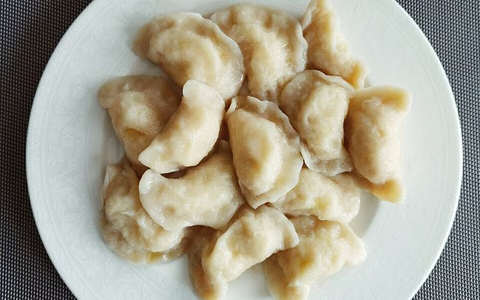

Empires & migration1700–1900
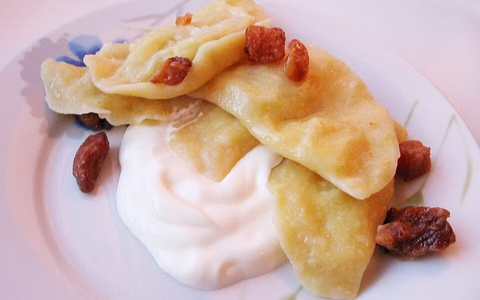 Empires & migration · Central / Left-bank UkraineVarenikiвареникиHalf-moon dumplings filled with anything from sour cherries to sauerkraut.D Dated text · with recipe
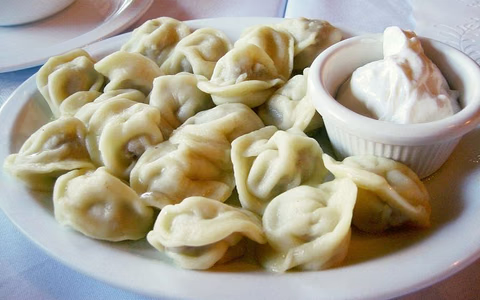 Empires & migration · PermPelmeniпельмениSmall meat dumplings, made in bulk and frozen outdoors in winter.D Dated text · with recipe
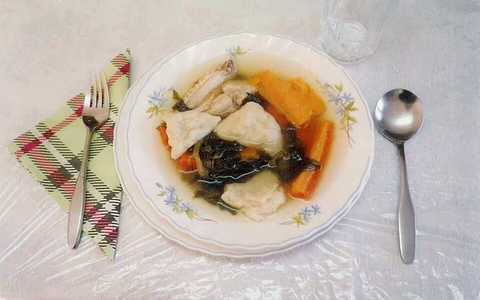 Empires & migration · AshkenazKreplachקרעפּלעךMeat-filled dough triangles served in chicken soup.D Dated text · with recipe
- Empires & migration · Volga TatarsTatar pilmänпилмәнFestive dumplings, always in clear broth.D Dated text · with recipe
- Empires & migration · Komi-PermyakKomiPelnyan of mushroom, onion and turnip.A Archaeological or primary source · with recipe
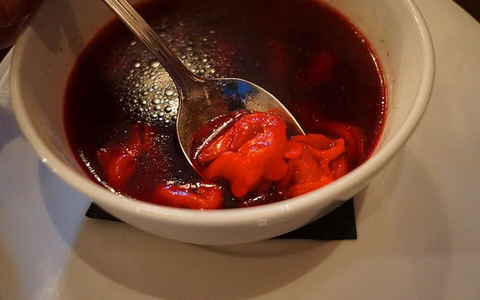 Empires & migration · Polish landsUszkaLittle ears floating in ruby borscht.D Dated text · with recipe
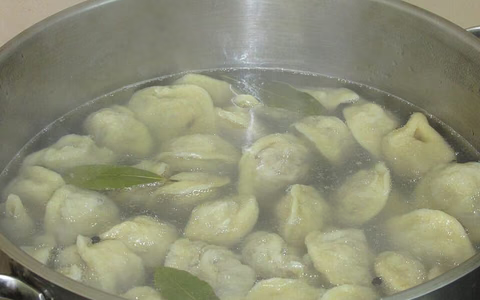 Empires & migration · IzhevskUdmurt pelnyanпельняньMeat, mushroom or berry dumplings, perhaps the source of the word “pelmeni”.A Archaeological or primary source · with recipe
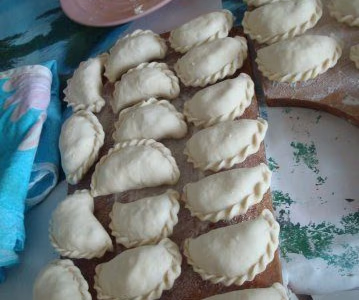 Empires & migration · Mari ElMari podkogylподкогыльоPalm-sized dumplings of potato, cheese, meat or cabbage.D Dated text · with recipe


