- First record
- 1330 · Islamic & Mongol world
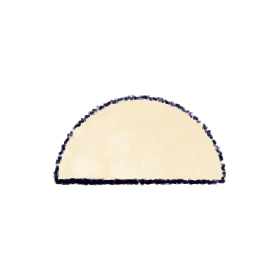
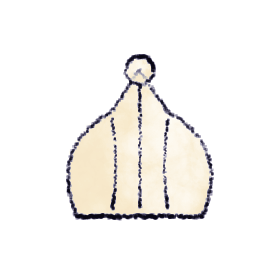
- Fold
- Purse, top-knot
- Cooked
- Steamed
Anatomy
Inside
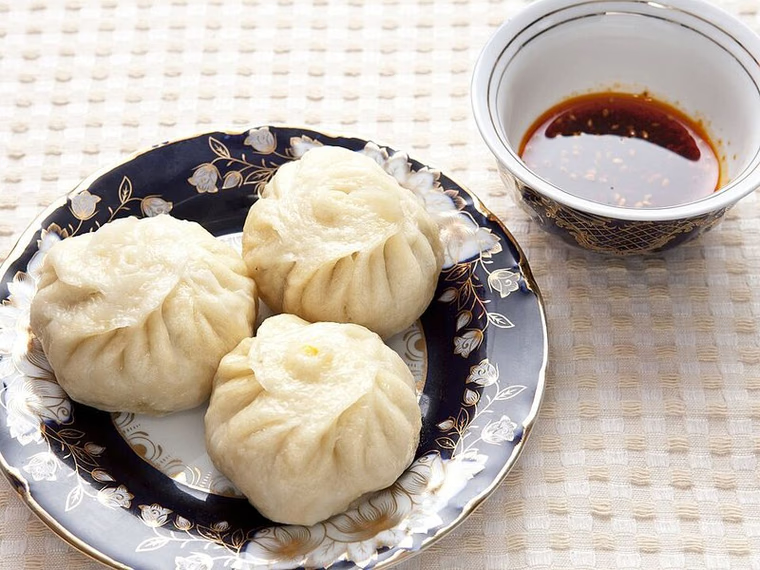
- Wrapper
- Wheat doughThin
- Filling
- Lamb, onion, pumpkin
- Cooked
- Steamed
- Served
- Vinegar/chilli
- Size
- About 9 cm across
Make it
Uyghur lamb and pumpkin manta
How to fold: Purse (gathered top)
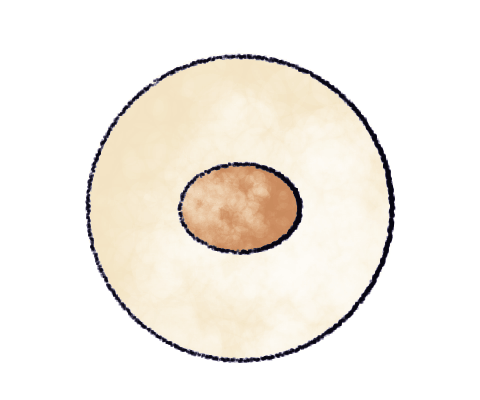
1 Filling in the middle of the round
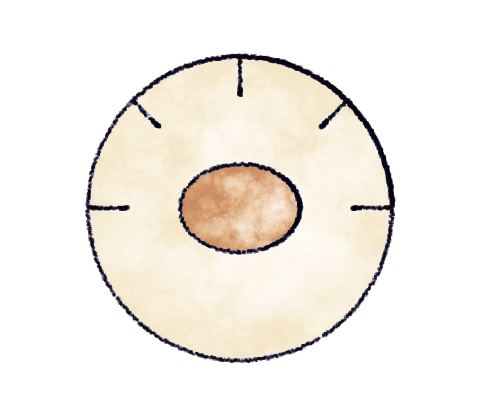
2 Lift the edge up all round
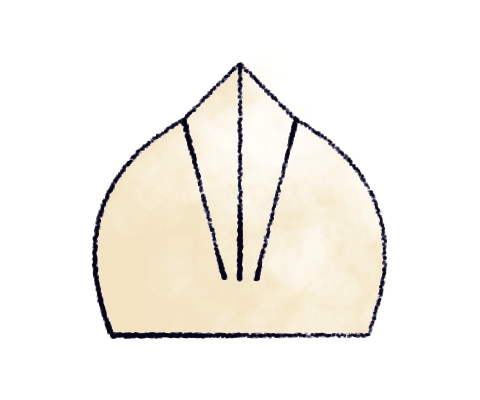
3 Pleat it as you turn, gathering to the top

4 Twist the top into a knot
Placeholder diagram. The atlas's illustrated fold animations will replace it.
Ingredients for 4
Dough
Filling
Cooking
To serve
Method
- Mix the flour and salt, add the egg white if using, then the water a little at a time. Knead 10 minutes to a firm, smooth dough. · timer 10 min
- Cover and rest the dough 30 minutes. · timer 30 min
- Mix the diced lamb and fat with the onions, cumin, pepper and salt.
- Stir in the water and the pumpkin. The onion juice and water keep the filling juicy.
- Roll the dough into a rope and cut about 20 pieces of 30 g.
- Roll each piece into a thin round about 12 cm across, a little thicker in the middle.
- Put a heaped tablespoon of filling in the centre.
- Gather the edge up around the filling in small pleats and pinch it shut at the top in a little twist. Leave no gaps.
- Bring water to a strong boil under the steamer. Oil the steamer trays and set the manta on them a finger apart.
- Steam on high heat until the dough is translucent and the meat cooked through, 25–30 minutes. · timer 28 min
- Serve hot with black vinegar and chilli for dipping.
Notes. Manta are the steamed dumplings of the Uyghur kitchen; a version is recorded in the Yuan court dietary manual Yinshan Zhengyao (1330). Meat is cut by hand rather than minced, and onion is used generously so that its juice and the melted lamb fat make a broth inside the skin. Pitir manta have a very thin wrapper like this one; boluq manta use a thicker yeasted dough. Pumpkin (kawa manta) is a common autumn addition; other versions use only lamb and onion, or add cabbage or spinach. Sheker manta are a sweet version with walnuts and honey or brown sugar. Some cooks fold the round into a square with four pinched corners instead of a gathered purse. Beef is the usual substitute for lamb.
Written for the atlas from several sources, cross-checked: The Hirshon Kawa Manta (Uyghur Lamb and Pumpkin Dumplings), Michael Hirshon (The Food Dictator); Chinese Baked Buns (烤包子) - Xinjiang lamb filling, Maggie Zhu (Omnivore's Cookbook); Uyghur cuisine (manta varieties), Wikipedia contributors. Not yet kitchen-tested.
Range
Where
From Xinjiang.
Pin · Kashgar · city
- OriginKashgar · East Turkestan/Tarim · city · Uyghur
How sure we are
Evidence
Fairly sure. A dated text records it by 1330.
The grade comes from the project's source report and has not yet been checked source by source. How grading works.
Notes from the research
Yinshan Zhengyao (1330) mentions manta.
This entry is drawn from the World Dumpling Atlas, §6.4, the project's source report. Its grade, D dated text, says how far that has been checked against a primary source.
History sources are from the atlas and not yet independently checked.
Family B