Uzbek manti
мантиmantisay MAHN-tee
Silk Road parcels from the tiered steamer.
SAArchaeological or primary sourceFamily B · Steppe / Silk Road manti

- First record
- 1897 · Empires & migration
- Fold
- Purse, top-knot
- Cooked
- Steamed
Anatomy
Inside
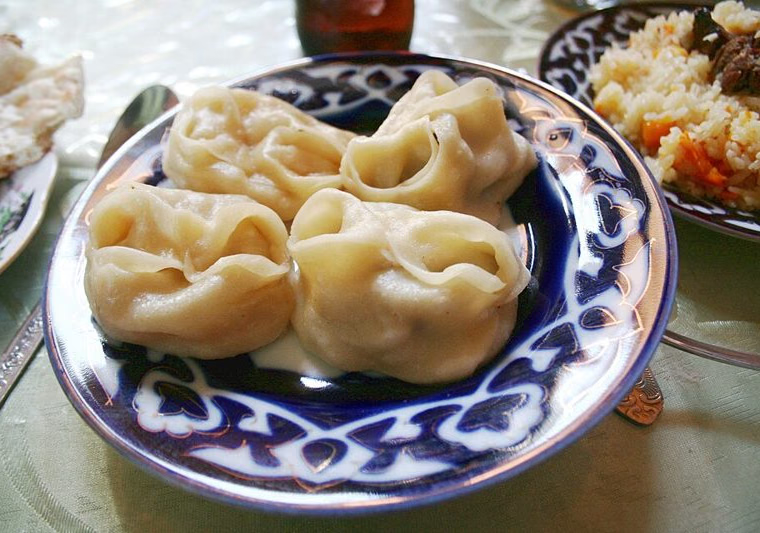
- Wrapper
- Wheat doughThin, large
- Filling
- Lamb/beef + fat-tail, onion, pumpkin
- Cooked
- Steamed
- Size
- About 9 cm across
Tastes of
- lamb
- onion
- cumin
- sour cream
Texture
- thin, tender wrapper
- juicy
Field notes
Story
Large steamed dumplings of lamb, onion and fat-tail (sometimes pumpkin), cooked in a stacked mantovarka. They belong to the manti lineage first recorded as manta at the Yuan court in 1330.
- How to eat it
- Top with sour cream or suzma and a little chilli.
- When
- Family feasts.
Did you know The manti family name stretches from Korean mandu to Turkish mantı.
Range
Where
From Uzbekistan. Popular in Russia, CIS.
Pin · Uzbekistan (Samarkand) · country, not a town
- OriginUzbekistan · Turkestan · country · Uzbeks
How sure we are
Evidence
Well established. An archaeological find or a primary source backs it.
We list 3 sources: 3 primary or archaeological. How grading works.
First record Samarkand province handbook, 1897, p. 189: "Mantu: pelmeni, larger than ordinary, cooked over steam" (A); first found
Sources
- A
Primary, page scan read (p. 189): in a numbered list of the "rare dishes used on special occasions", item 10 is "Манту — пельмени, покрупнее обыкновенных, приготовляемые над паром" (mantu: pelmeni, somewhat larger than…
Primary, page scan read (p. 189): in a numbered list of the "rare dishes used on special occasions", item 10 is "Манту — пельмени, покрупнее обыкновенных, приготовляемые над паром" (mantu: pelmeni, somewhat larger than ordinary ones, prepared over steam). The article states that the population of the volost is Sunni Muslim Uzbek; the volost lies about 40 versts from Samarkand. Item 1 of the same list is boiled mutton-and-onion pelmeni called "barak" (see chuchvara). - A
Весь русский Туркестан (Ташкент, 1908)
Tashkent guidebook (OCR text, about p. 39): in large towns and villages there are eating-houses (ash-khana) where for 5 kopeks one can get "плов, пельмени (манты), пирожки (самсы), шашлык" and other dishes of the native kitchen.
- A
Таджики. Ч. 1. Этнография (Ташкент, 1910)
Tajiks of the Samarkand/Tashkent area (OCR text, about p. 120): "Базарные пельмени, называющиеся манть или манту, приготовляются тут же в лавочке, варятся посредством пара и продаются горячими; довольно вкусны, но жирны…
Tajiks of the Samarkand/Tashkent area (OCR text, about p. 120): "Базарные пельмени, называющиеся манть или манту, приготовляются тут же в лавочке, варятся посредством пара и продаются горячими; довольно вкусны, но жирны и содержат весьма много перца." Bazaar food, made in the stall, steamed, sold hot.
Found by research in October 2026; awaiting editorial review.
Notes from the research
Silk Road lineage.
The tagline and story are editorial; facts trace to the atlas research. History sources are from the atlas and not yet independently checked.
Family B



.jpg)