Dim sim
say DIM sim
Melbourne's fish-and-chip-shop dumpling.

- Region
- Oceania and the Pacific
- First record
- 1928 · Modern & global
- Fold
- Open-topped purse
- Cooked
- Steamed, deep-fried
Anatomy
Inside
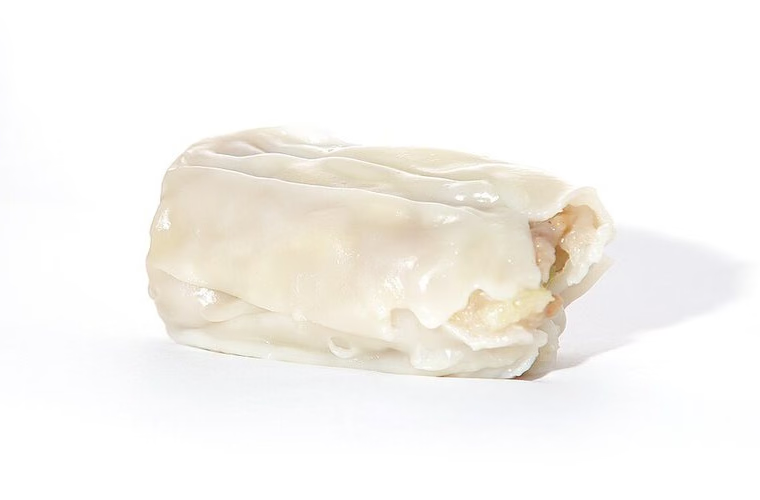
- Wrapper
- Wheat doughThick skin
- Filling
- Pork/mutton, cabbage
- Cooked
- Steamed, deep-fried
- Size
- About 6 cm across
Tastes of
- pork
- cabbage
- soy sauce
Texture
- thick skin
- crisp when fried
Field notes
Story
A thick-skinned cousin of siu mai, developed in Melbourne's Chinatown around 1945 (credited to William Wing Young). Sold at chip shops and footy grounds.
- How to eat it
- Steamed or fried, splashed with soy sauce.
- When
- Footy matches and takeaway nights.
History
Term attested 1928. Modern form developed by William Wing Young, Wing Lee, Melbourne Chinatown, c. 1945 (per his daughter Elizabeth Chong). Larger "South Melbourne Market" style (Ken Cheng).
Did you know The word "dim sim" was already in use in 1928.
Make it
Melbourne dim sims
How to fold: Purse (gathered top)

1 Filling in the middle of the round

2 Lift the edge up all round

3 Pleat it as you turn, gathering to the top

4 Twist the top into a knot
Placeholder diagram. The atlas's illustrated fold animations will replace it.
Ingredients for 4
Filling
Wrappers
To cook
To serve
Method
- Shred the cabbage finely, toss with the salt and leave to draw out water. · timer 10 min
- Squeeze the cabbage very dry in a cloth.
- Mix the pork, chopped belly or lamb, spring onions, carrot, ginger, soy sauce, sesame oil, cornflour, sugar and plenty of white pepper.
- Beat in the stock a spoonful at a time until the mixture is sticky, then mix in the cabbage.
- Put a heaped tablespoon of filling on a wrapper and gather the sides up around it, squeezing into a fat cylinder with the top left open.
- Tap the base on the bench to flatten it so the dim sim stands up.
- Steam in a lined steamer over boiling water until firm and cooked through. · timer 13 min
- To fry instead, heat oil to 180 °C and deep-fry the steamed dim sims until golden and crisp. · timer 5 min
- Serve hot with soy sauce.
Notes. The dim sim is an Australian dish, not Cantonese dim sum: the name is recorded from 1928, and the large, thick-skinned, peppery form was popularised in the 1940s by William Wing Young's Wing Lee company in Melbourne. Early versions often contained mutton or lamb; commercial ones use pork, cabbage and a sturdy skin built to survive steaming, deep-frying and the freezer. The "South Melbourne" dim sim from the market there is a larger, rounder variety. Shop wrappers are thinner than commercial dim sim skins, so using two layers or gow gee wrappers gets closer to the takeaway texture. Usually eaten from fish-and-chip shops and at the football with soy sauce.
Written for the atlas from several sources, cross-checked: Marion's Best Dim Sim, Marion Grasby (Marion's Kitchen); Dim Sim Recipes & How to Make Your Own, Dave Hooper; Pork & Vegetables Dim Sims, Hiroko Liston. Not yet kitchen-tested.
Range
Where
From Melbourne, Australia.
Pin · Melbourne Chinatown · city
How sure we are
Evidence
Reasonably sure. Reference works agree, but we have not yet found a dated or primary source.
The grade comes from the project's source report and has not yet been checked source by source. How grading works.
This entry is drawn from the World Dumpling Atlas, §6.28, the project's source report. Its grade, S secondary consensus, says how far that has been checked against a primary source.
The tagline and story are editorial; facts trace to the atlas research. History sources are from the atlas and not yet independently checked.
Family A