Drag to turn · tap to squish
Region
Chinese minority and lesser-known regional cuisines
First record
1870 · Empires & migration
Fold
Wonton, trailing skin
Cooked
Boiled in clear broth, often with peanut noodles
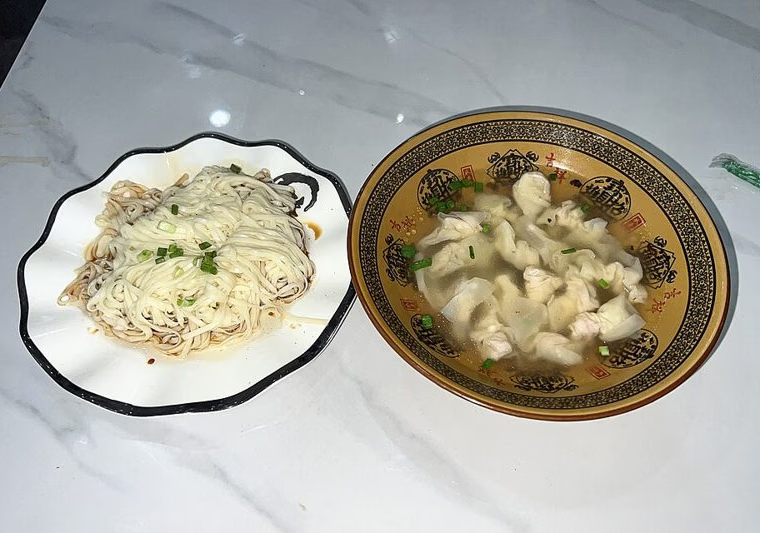
Fuzhou bianrou soup with banmian noodles
As served. Photo N509FZ, CC BY-SA 4.0, via Wikimedia Commons.
Wrapper
Wheat doughFilled; savory; thin flour wrapper
Filling
Pork pounded to a springy paste; very thin wrapper
Cooked
Boiled in clear broth, often with peanut noodles
Served
An everyday snack
Size
About 4 cm across

Not known yet We don’t yet have a written story or a recipe for Fuzhou bian rou. What we do have is below, with its sources.

Where

Open the map →

From Fuzhou. Popular in Fujian and Fuzhou diaspora.

Pin · Fuzhou (nudged 0.33° N of the meat-swallow pin)

  • OriginFuzhou · Min · Fuzhounese

Evidence

Fairly sure. A dated text records it by 1870.

We list 3 sources: 2 primary or archaeological, 1 secondary. How grading works.

First record Maclay & Baldwin, Alphabetic Dictionary of the Foochow Dialect, 1870, p. 668: 扁食 "pieng sik, a sort of meat dumplings" (D); first found, under the older Fuzhou name, not 扁肉 itself

Sources

  • A

    An Alphabetic Dictionary of the Chinese Language in the Foochow Dialect (Foochow, Methodist Episcopal Mission Press, 1870), p. 668

    Archaeological or primary source · R. S. Maclay & C. C. Baldwin · 1870

    Round 2. Primary, OCR text read (p. 668, running head PIENG; page image not viewed): under the character 扁, "Flat, low, not globular ...", the list of common compounds includes "pieng sik, a sort of meat dumplings", and… Round 2. Primary, OCR text read (p. 668, running head PIENG; page image not viewed): under the character 扁, "Flat, low, not globular ...", the list of common compounds includes "pieng sik, a sort of meat dumplings", and 扁食 is printed among the numbered character compounds for that entry. The preface is dated Foochow, June 14th 1870. Identity match: PARTIAL. It proves that a meat dumpling called 扁食 was an everyday Fuzhou-dialect word in 1870; it does not use the name 扁肉 and gives no wrapper, filling or cooking details, so it cannot tell bian rou apart from other wonton-type dumplings. No entry for 扁肉 or for 肉燕 was found in the OCR text (the OCR of the romanised Foochow is poor, so that is not conclusive).
  • A

    清稗類鈔, 飲食類, entry 扁食 (Wikisource transcription, section 106)

    Archaeological or primary source · 徐珂 (Xu Ke); 商務印書館, Shanghai · 1916-1917

    RELATED TERM ONLY: '北方俗語,凡餌之屬,水餃、鍋貼之屬,統稱為扁食,蓋始於明時也。' A northern usage; does not mention Fujian or 扁肉.

  • S

    Baidu Baike (as noted in the atlas; not re-opened)

    Secondary consensus · Baidu Baike

    Existing basis: the name is tied to Ming-era 扁食 bianshi, a general term for boiled filled dumplings.

Notes from the research

Name tied to Ming-era 扁食 bianshi, a general term for boiled filled dumplings (Baidu Baike).

Family A

Kin