
Wontons whose wrapper is made of pounded pork.
Fuzhou and Ningde, Fujian · first recorded 1917
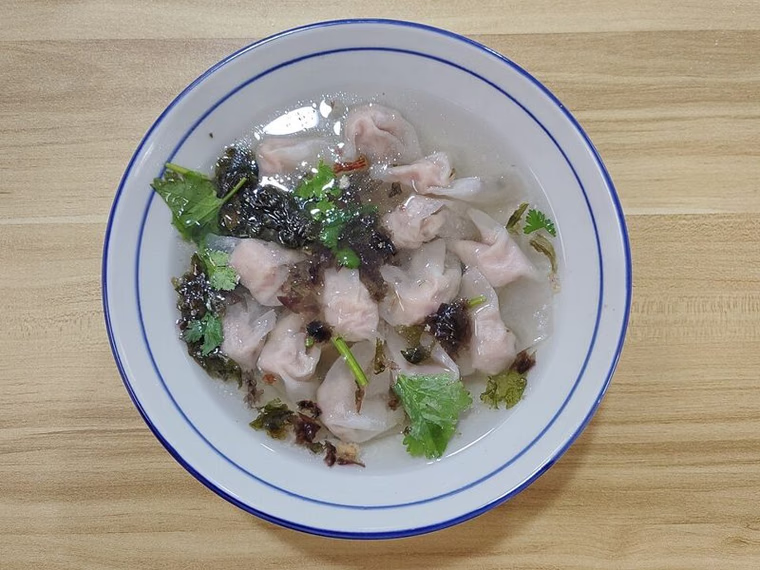 Photo Yumeto · CC BY-SA 4.0 · Wikimedia Commons
- Wrapper
- Potato or starch doughFilled; savory; meat-based wrapper
- Filling
- Wrapper (燕皮 yanpi) is lean pork-leg meat pounded with wooden mallets and mixed with sweet-potato starch into paper-thin sheets. Filling: pork, sometimes fish, water chestnut, mushroom
- Cooked
- Boiled, steamed, in soup
- Size
- SmallAn estimate, about 4 cm across: no source gives a measure yet.
Tastes of
- pork
- water chestnut
- mushroom
- broth
Texture
- paper-thin meat skin
Field notes
Story
Fuzhou and Ningde dumpling whose skin, yanpi, is lean pork leg pounded with wooden mallets and mixed with sweet-potato starch into paper-thin sheets. The filling is pork, sometimes with fish, water chestnut or mushroom.
- How to eat it
- Served in broth.
- When
- Taiping yan, with duck eggs, is served at weddings, New Year and banquets.
Did you know Taiping yan puns on "peace". The story that a chef named the dish for its swallow shape is anecdotal.
Make it
Fuzhou rouyan (meat swallows) with ready-made yanpi
- Makes
- about 40 small dumplings
- Prep
- 40 min
- Cook
- 15 min
- Level
- medium
- Fold
- purse
How to fold: Purse (gathered top)

1 Filling in the middle of the round
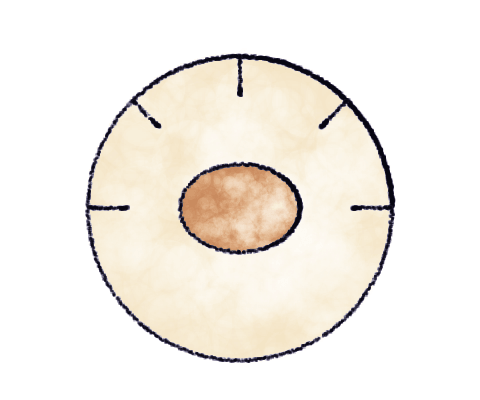
2 Lift the edge up all round

3 Pleat it as you turn, gathering to the top
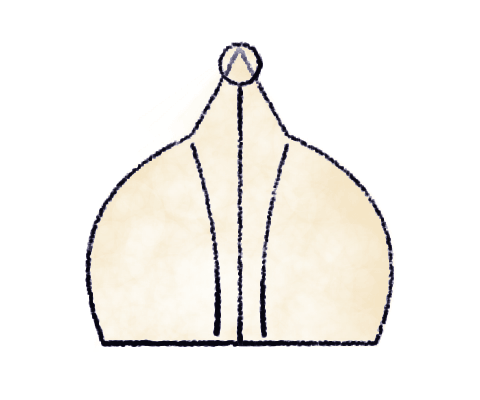
4 Twist the top into a knot
Placeholder diagram. The atlas's illustrated fold animations will replace it.
Ingredients for 3
Wrappers
Filling
To serve
Method
- Cut the dry yanpi sheets into wonton-sized squares, handling them gently because they are brittle.
- Lay the squares on a board without overlapping and cover them with a clean cloth that is wet but not dripping.
- Leave until the skins are soft and pliable, misting them lightly with water if they stay stiff.Timer 10 min
- Meanwhile, peel the water chestnuts, crush them with the flat of a knife and chop them coarsely.
- Mix the pork with the egg, water chestnuts, salt, soy sauce, wine and the sugar and spring onion if using, stirring until sticky.
- Put a small spoonful of filling on a softened skin and gather the skin round it, pinching just above the filling so the loose edges fan out like a tail.
- Arrange the dumplings on a steamer rack, not touching.
- Steam over boiling water until the skins turn translucent and the filling is just cooked.Timer 10 min
- Bring the stock or water to the boil, add the steamed dumplings and heat through.Timer 2 min
- Ladle into bowls and season with shrimp oil or salt, a few drops of sesame oil and the chopped celery leaves or chives.
Sources
- Rouyan, Shu Xun (Simple Chinese Food)
- Special Snack-flat Pork Yan, Tomato Baby House (Simple Chinese Food)
Where
From Fuzhou and Ningde, Fujian. Popular in Fuzhou diaspora (Singapore, Malaysia, NYC).
Pin · Fuzhou
- OriginFuzhou · Min · Fuzhounese
Evidence
Strong evidence
Xu Ke's compendium of 1916-17 gives the first description we've found: a Fujian speciality whose wrapper is made of beaten pork. One Fuzhou shop dates itself to 1876, but we've only seen that claim reported, not checked. The stories of who invented the wrapper and how the dish got its name are anecdotes rather than records.
Sources
- early 20th c.Earliest record

'Wang Shitong popularized yanpi in the first decades of the 20th century by drying it, allowing it to be stored for long periods' - cited to 福建省志 vol. 24 (福建人民出版社, 1992), p. 430. The gazetteer itself was not opened.
- 1876

福州同利肉燕制作技艺 (China Intangible Cultural Heritage Network; brand-site summaries)
Shop tradition: 同利肉燕 'founded in Guangxu 2 (1876)' in Fuzhou, four or five generations; its craft is a Fujian provincial intangible heritage item (inheritor 陈君凡 appears in a provincial list on Wikisource). The ihchina.cn page failed to load; claim…
Confirmed by web search; not yet read in full
- 1916-1917

清稗類鈔, 飲食類 (Wikisource transcription, section 107)
Entry 肉燕: '肉燕者,閩人特殊之肴也。取豬肉之至精者,以木擊之,使糜爛如泥,和以米粉,搯之成薄皮,色甚白,曰肉燕。復切碎之,裹以豬肉,煮食。'
- 1916
Publication data for the above: compiled by Xu Ke (1869-1928); 'published by the Commercial Press in 1916 in 48 volumes'.
- Undated

Existing atlas note (anecdotal attributions)
A chef named the dish 'flat-meat swallow' for its swallow shape; Wikipedia's 'invented 1234' is unsourced.
Not yet checked against the original
The tagline and story are editorial; the facts trace to the research above. How we weigh evidence
Family A


