Nepali momo
म:म:ma:ma / mog mogsay MOH-moh
The Himalayas' favourite street food.

- First record
- 1942 · Modern & global
- Fold
- Purse, top-knot
- Cooked
- Steamed, pan-fried, in soup
Anatomy
Inside
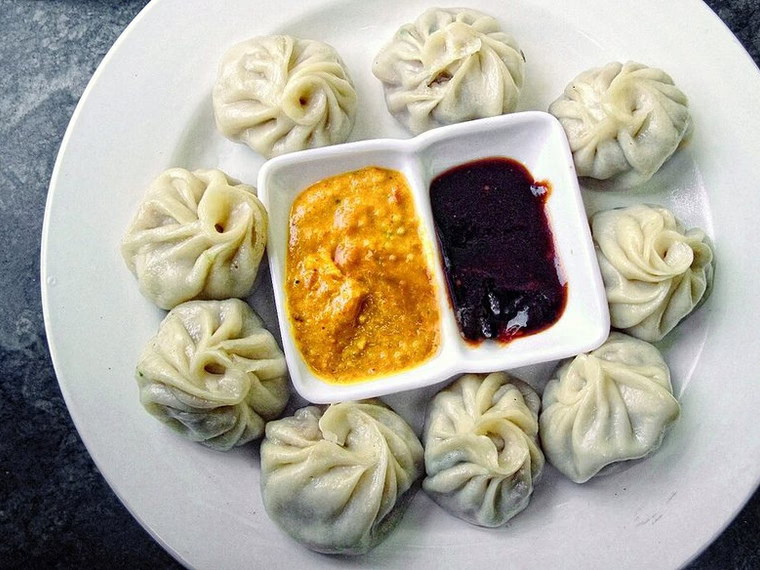
- Wrapper
- Wheat doughThin
- Filling
- Buffalo ("buff"), chicken, veg; spiced
- Cooked
- Steamed, pan-fried, in soup
- Size
- About 4 cm across
Tastes of
- buffalo or chicken
- onion
- ginger
- sesame-tomato achar
Texture
- soft, pleated
- juicy
Field notes
Story
Tibetan steamed dumpling adapted by Newar traders in Lhasa and carried to Kathmandu. It became mass street food from the 1940s onwards and is now eaten across Nepal and northern India.
- How to eat it
- Dip in tomato-sesame achar; try jhol momo swimming in sour soup.
- When
- Everyday; Losar.
History
Lhasa Newar traders adapted the Tibetan dumpling. Kamal Ratna Tuladhar recalls seeing a momo shop on a Kathmandu roadside for the first time around 1942 (Caravan to Lhasa). Until then momo was cooked only in wealthy Lhasa-Newar homes. A rival claim of Nepali origin via Princess Bhrikuti is unsupported.
Did you know The word probably comes from Chinese 馍馍 momo, meaning steamed bun.
Make it
Kathmandu momo with tomato-sesame achar
How to fold: Purse (gathered top)

1 Filling in the middle of the round
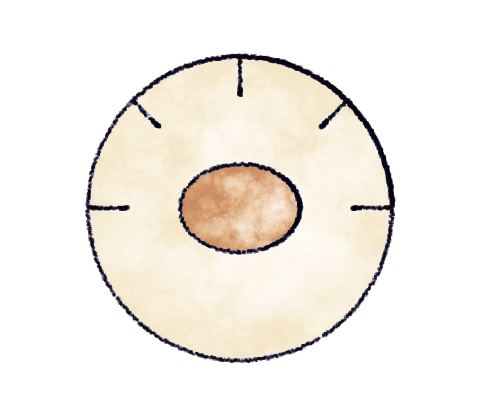
2 Lift the edge up all round

3 Pleat it as you turn, gathering to the top

4 Twist the top into a knot
Placeholder diagram. The atlas's illustrated fold animations will replace it.
Ingredients for 4
Dough
Filling
Achar
Method
- Mix the flour, salt and oil with the water and knead into a firm, smooth dough. · timer 5 min
- Cover the dough with a damp cloth and rest it. · timer 30 min
- Mix the mince with the onion, spring onions, garlic, ginger, chopped coriander, spices and salt.
- Work in the melted ghee and the cold water a little at a time until the filling is loose and juicy.
- For the achar, char the tomatoes and chillies in a dry pan or over a flame until blistered. · timer 8 min
- Dry-toast the sesame and peanuts until golden, stirring. · timer 4 min
- Blend the tomatoes, chillies, nuts and seeds, garlic, timur, oil, lemon juice and salt to a smooth sauce, thinning with water. Stir in chopped coriander.
- Roll the dough into a log, cut about 32 pieces and roll each into a 8 cm round, thinner at the edge.
- Put a tablespoon of filling in the centre and pleat the rim all the way round, twisting the top shut into a round purse.
- Brush the steamer tiers with oil and set the momo in without touching.
- Steam over rapidly boiling water until the wrappers look slightly translucent and the filling is cooked. · timer 12 min
- Serve hot with the achar on the side, or pour thinned achar over them for jhol momo.
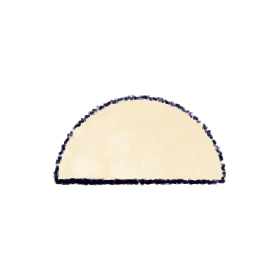
Notes. Buff (water buffalo) is the classic Kathmandu filling; the dish is usually linked to Newar trade with Tibet. Chicken, pork and vegetable (cabbage, paneer, potato) are common today. Momo are also made in a half-moon shape (especially vegetarian ones), fried (kothey, pan-fried on one side; fried momo) or tossed in chilli sauce (C-momo). Jhol momo are served in a thinner, soupier achar. Raw filling is the norm; some restaurant recipes cook the filling first, which gives a drier result. Frozen momo need about 20 minutes' steaming.
Written for the atlas from several sources, cross-checked: Chicken Momo Restaurant Style (Kukhura ko Momo), Salina (Junifoods); Kathmandu Jhol Momo, Salina (Junifoods); Delicious Chicken MoMo Recipe, Little Nepal Cuisine (Regina). Not yet kitchen-tested.
Range
Where
From Kathmandu Valley (Newar). Popular in all Nepal, India, global.
Pin · Kathmandu · city
How sure we are
Evidence
Reasonably sure. Reference works agree, but we have not yet found a dated or primary source.
The grade comes from the project's source report and has not yet been checked source by source. How grading works.
This entry is drawn from the World Dumpling Atlas, §6.8, the project's source report. Its grade, S secondary consensus, says how far that has been checked against a primary source.
The tagline and story are editorial; facts trace to the atlas research. History sources are from the atlas and not yet independently checked.
Family B