
The filled steamed bun.
North China · first recorded 266 CE
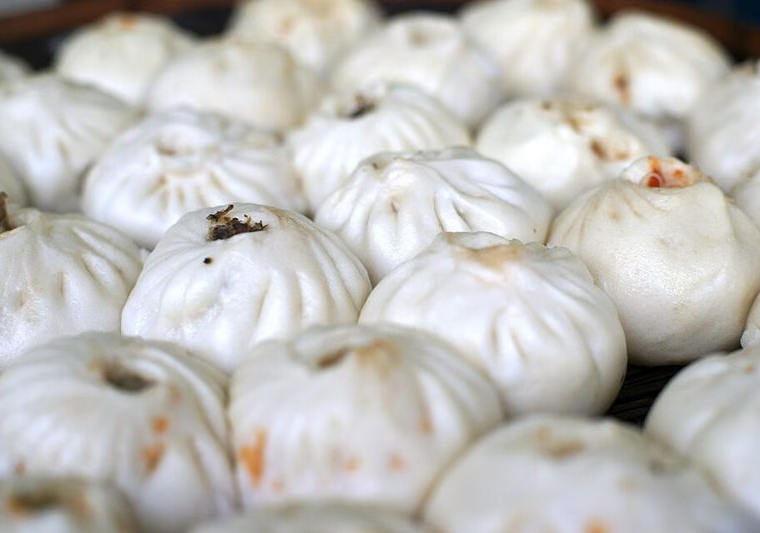 Photo Popo le Chien · CC0 · Wikimedia Commons
- Wrapper
- Yeasted wheat doughLeavened dough
- Filling
- Pork, vegetables, red bean, lotus
- Cooked
- Steamed
- Size
- LargeAn estimate, about 9 cm across: no source gives a measure yet.
Tastes of
- pork
- vegetables
- red bean
- lotus
Field notes
Story
Leavened steamed bun of North China, now eaten nationwide, filled with pork, vegetables, red bean or lotus. It inherited the old meaning of mantou, which once named a filled bun.
- When
- Breakfast.
Make it
Pork baozi (northern steamed pork buns)
- Makes
- 20 buns
- Prep
- 3 hours
- Cook
- 20 min
- Level
- medium
- Fold
- purse
How to fold: Purse (gathered top)

1 Filling in the middle of the round
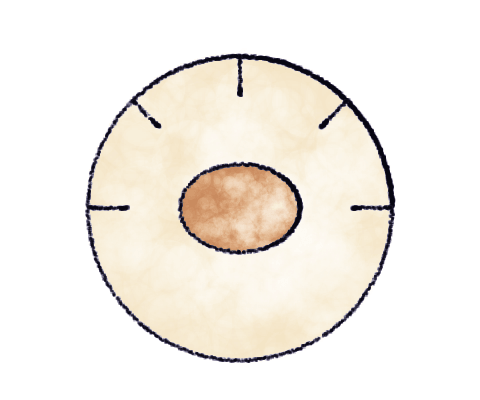
2 Lift the edge up all round
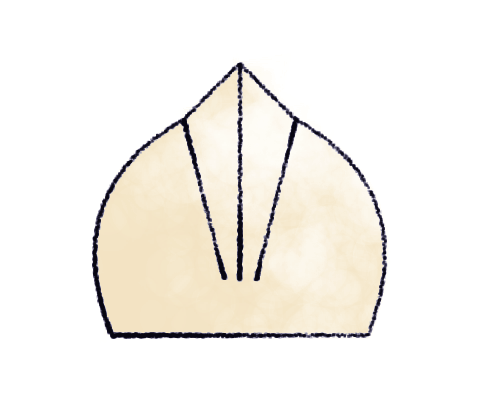
3 Pleat it as you turn, gathering to the top
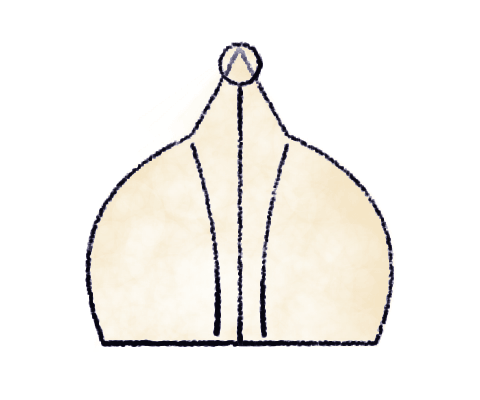
4 Twist the top into a knot
Placeholder diagram. The atlas's illustrated fold animations will replace it.
Ingredients for 6
Dough
Filling
Method
- Dissolve the yeast and sugar in the lukewarm water and leave until foamy.Timer 15 min
- Add the flour a little at a time and knead to a soft, smooth dough.Timer 15 min
- Shape into a ball, cover with a damp cloth and leave in a warm place to rise.Timer 60 min
- Meanwhile, stir the 45 ml water into the minced pork.
- Heat the oil in a wok over medium heat and cook the ginger and onion until the onion is soft.
- Add the pork, raise the heat and stir until it turns pale and opaque.Timer 3 min
- Stir in the wine, soy sauce, both bean sauces, oyster sauce, sugar, pepper and sesame oil and cook over high heat to drive off excess liquid.Timer 2 min
- Stir in the cornflour mixture and let it bubble until the filling thickens, about a minute.Timer 1 min
- Spread the filling out to cool, uncovered, then mix in the spring onions.
- Knead the risen dough briefly on a floured surface and divide it into 20 pieces of about 48–50 g.Timer 2 min
- Roll each piece into a round, working from the edge towards the middle so the centre stays about twice as thick as the rim.
- Put a spoonful of filling in the centre and pleat the edge round it in small folds, 10–15 in all, pinching the top shut.
- Set the buns on squares of baking paper in the steamer, well apart, cover and leave to prove.Timer 15 min
- Put the steamer over cold water, turn the heat to medium and steam for 15 minutes.Timer 15 min
- Turn off the heat and leave the lid on for 5 minutes before opening, so the buns do not collapse.Timer 5 min
Sources
- Steamed Pork Buns (Baozi), Judy Leung (The Woks of Life)
Where
From North China. Popular in nationwide.
- OriginNorth China · Han
Evidence
Good evidence
The earliest description we've found is in Shu Xi's Bing fu, written in the Western Jin between 266 and 316, which mentions mantou filled with meat. The name baozi itself appears later, in the Song. So the oldest record is of the filled bun under an older name.
Sources
- c. 300Earliest record

Shu Xi's rhapsody on bing (Western Jin, around 300 CE) names 曼頭 mantou, then a bun that could hold a filling; the filled meaning survives in baozi.
Confirmed by web search; not yet read in full
- Northern Song

燕翼詒謀錄 (as cited in Chinese food-history articles)
The word 包子 is first recorded in the Song: the Yanyi yimou lu says that on the birthday of Emperor Renzong the court gave the officials 'baozi', glossed as another name for mantou (as reported; not checked against the book).
Not yet checked against the original
- Undated
Reference summary: baozi inherited the old filled-mantou meaning; Mandarin mantou now means the plain bun.
Confirmed by web search; not yet read in full
The tagline and story are editorial; the facts trace to the research above. How we weigh evidence
Family A
Kin


Compare


