Gyōza
餃子gyōzasay GYOH-zah
Crisp-bottomed, garlicky, made for beer.
- Region
- Japan
- First record
- 1689 · Renaissance & print
- Fold
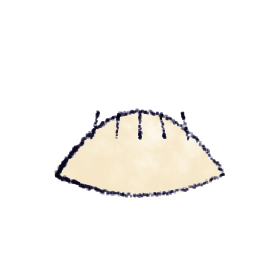
- Crescent
- Cooked
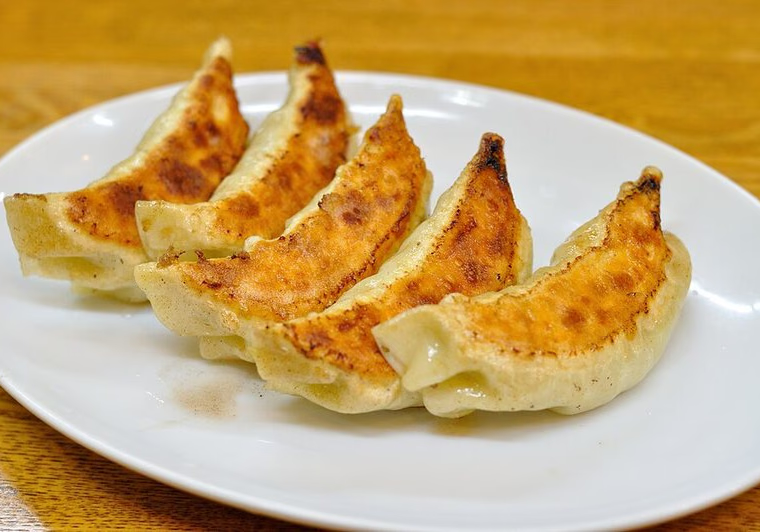
- Pan-fried, steamed
Anatomy
Inside
Field notes
Story
Japan's pan-fried version of jiaozi. Recorded in Mito-domain texts from 1689, but popularised after 1945 by soldiers and settlers returning from Manchuria.
- How to eat it
- Dip in soy, rice vinegar and rayu (chilli oil).
- When
- With ramen and beer; Utsunomiya's November festival.
History
The 2024 T&F article "The Gyoza Era and Memories of Manchuria" says gyoza appears in Japanese literature from the late 17th century. Its examples are Mito-domain records of Zhu Shunsui serving gyoza to Tokugawa Mitsukuni (1689) and a full recipe in a 1771 menu record. The authors caution this doesn't prove Mitsukuni was the first. Gyoza was in Meiji Chinese restaurants. Mass popularity came after WWII through returnees from Manchuria, including Kwantung Army soldiers and settlers ("The Gyoza Era and Memories of Manchuria", 2024).
Did you know Utsunomiya and Hamamatsu compete every year for the title of Japan's gyōza capital.
Make it
Pan-fried pork and cabbage gyoza
How to fold: Crescent pleat
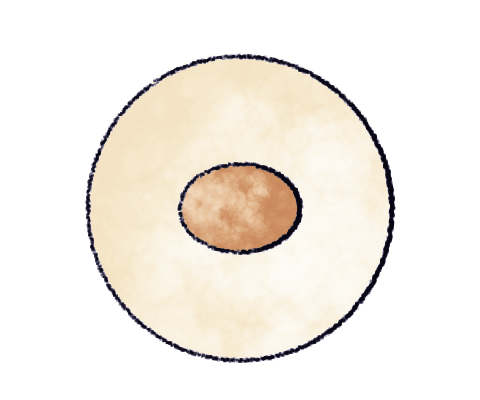
1 Filling in the middle of the round
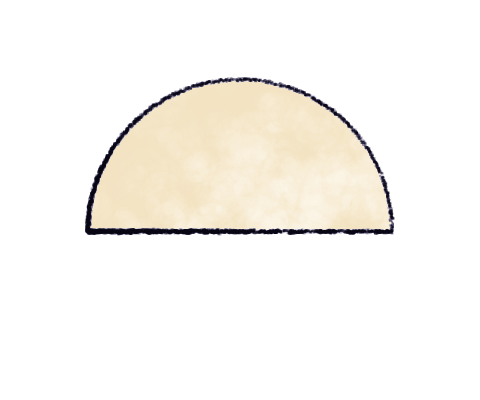
2 Fold in half and pinch the centre shut
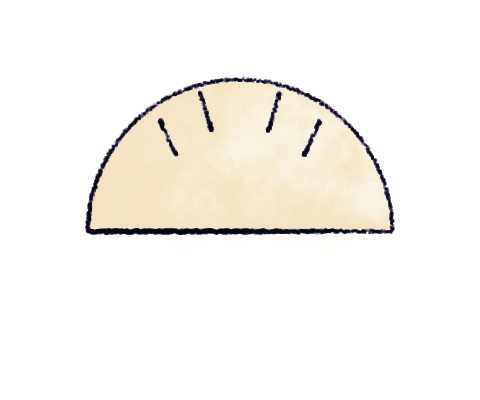
3 Make small pleats on the front edge only
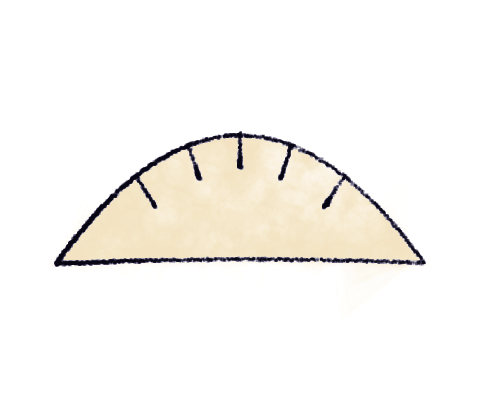
4 The pleats curve it into a crescent
Placeholder diagram. The atlas's illustrated fold animations will replace it.
Ingredients for 4
Filling
Assembly
Dipping sauce
Method
- Chop the cabbage very finely, toss with the salt and leave to wilt. · timer 10 min
- Squeeze the cabbage hard in your hands or a cloth to remove as much water as possible.
- Chop the nira finely; grate the garlic.
- Knead the pork with the soy sauce, sake, sesame oil, ginger, garlic and pepper until pale and sticky. · timer 2 min
- Mix in the cabbage, nira and potato starch.
- Hold a wrapper in your palm, put a heaped teaspoon of filling in the centre and wet half the rim with water.
- Fold the wrapper over and make 4-6 small pleats along the front edge only, pressing each against the flat back edge to seal.
- Heat the oil in a non-stick frying pan over medium-high heat and line up the gyoza flat side down.
- Fry until the bottoms are golden. · timer 3 min
- Pour in the water, cover at once and steam over medium heat until the wrappers turn translucent. · timer 4 min
- Uncover, let any remaining water boil off, drizzle the sesame oil round the edge and fry until the bottoms are crisp again. · timer 2 min
- Turn out crisp side up onto a plate and serve with the dipping sauce.
Notes. Yaki-gyoza descends from Chinese jiaozi; it became a Japanese everyday food after 1945, when returnees from Manchuria opened gyoza shops (Utsunomiya and Hamamatsu now compete as gyoza cities). Japanese gyoza use thin bought wrappers, a finer, more garlicky filling and pan-frying rather than boiling. Napa cabbage (hakusai) works in place of green cabbage. For a single crisp lattice ("hane"), mix 1 tsp flour into the steaming water. Sui-gyoza (boiled) and age-gyoza (deep-fried) are the other common forms. Kikkoman blanches the cabbage rather than salting it; both methods are about removing water.
Written for the atlas from several sources, cross-checked: Gyoza, Namiko Hirasawa Chen (Just One Cookbook); 焼き餃子 (Yaki gyoza), Kikkoman Home Cooking. Not yet kitchen-tested.
Range
Where
From Chinese jiaozi (Manchuria). Popular in all Japan.
Pin · Mito (Zhu Shunsui records) · city
- Popular inUtsunomiya · city
- Popular inHamamatsu · city
- Popular inFukuoka · city
How sure we are
Evidence
Fairly sure. A dated text records it by 1689.
The grade comes from the project's source report and has not yet been checked source by source. How grading works.
This entry is drawn from the World Dumpling Atlas, §6.5, the project's source report. Its grade, D dated text, says how far that has been checked against a primary source.
The tagline and story are editorial; facts trace to the atlas research. History sources are from the atlas and not yet independently checked.
Family A